

Freshwater Fish Diseases
Most freshwater fish illnesses can be cured if you catch them early and treat them correctly. Use the diagram to see where each problem tends to show up, then tap any disease below to see what causes it, the signs to watch for, treatments that work in freshwater and how to stop it coming back. A small hospital tank is one of the best investments you can make: it lets you medicate one fish without harming your plants, snails, shrimp or the helpful bacteria in your main filter.
Most outbreaks start with stress, so good water quality and careful stocking are your first line of defense. Use our Freshwater Fish Compatibility Chart to pick peaceful tank mates, and browse Freshwater Fish for care needs of each species.
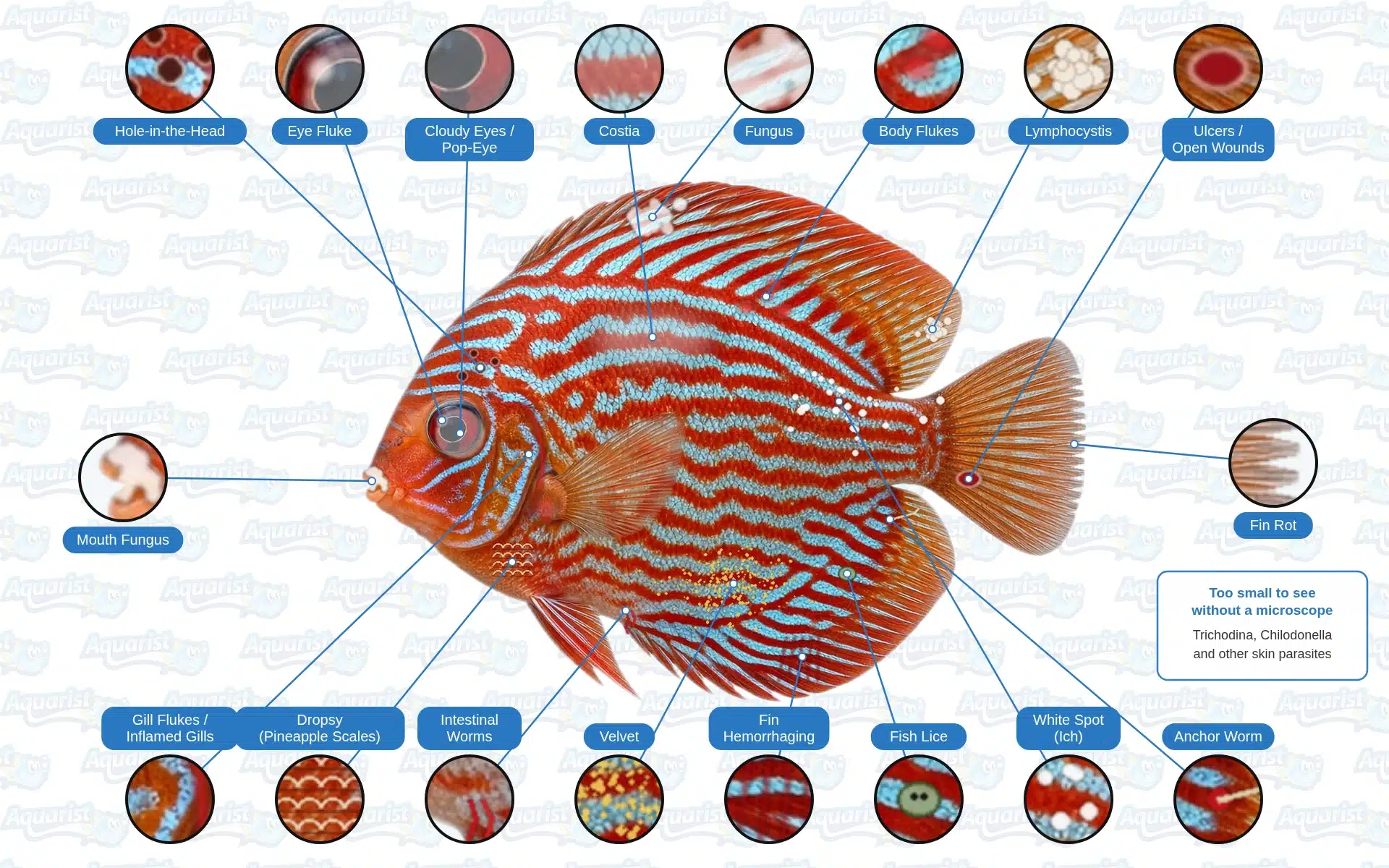
Tap any small picture on the diagram, or choose a disease below, for signs, treatment and prevention.
Ammonia and Nitrite Poisoning
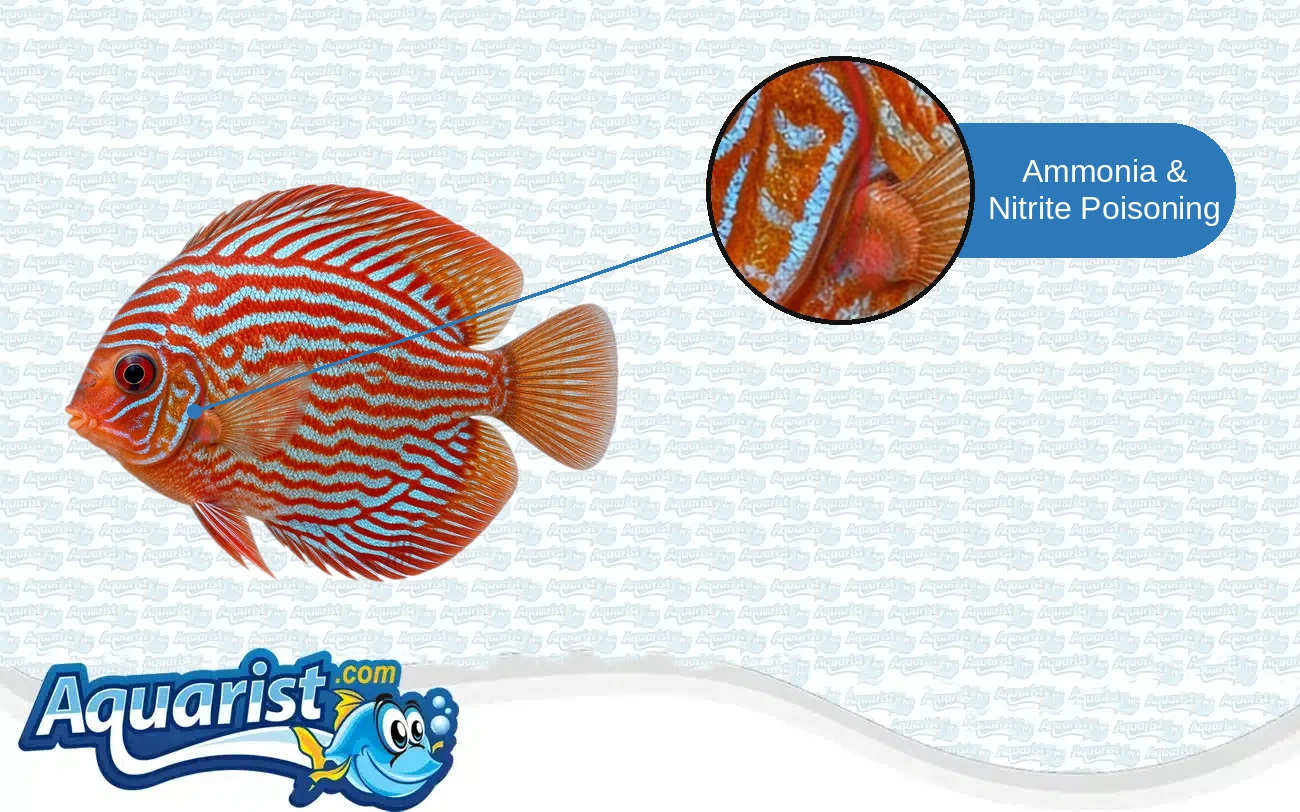
What it is
Ammonia and nitrite come from fish waste and leftover food. In a new tank, or when the filter is disturbed, they rise to toxic levels. This is one of the most common reasons fish die in home aquariums.
Signs to look for
- Gasping at the surface
- Red or inflamed gills
- Lethargy and loss of appetite
- Brown or tan gills with nitrite poisoning
Treatment
- Test the water now.
- Do a 50% water change with dechlorinated, temperature-matched water.
- Use a detoxifying water conditioner.
- Stop feeding for a day or two.
- For nitrite, a little aquarium salt helps protect the gills of tolerant fish.
Prevention
- Cycle new tanks fully before adding fish.
- Don't clean all filter media at once and don't overstock.
Please note: This guide is general information, not a diagnosis. Always follow the medication's label for dose and duration, treat in a separate hospital tank when you can, and ask a fish vet if you're unsure.
Anchor Worms and Fish Lice
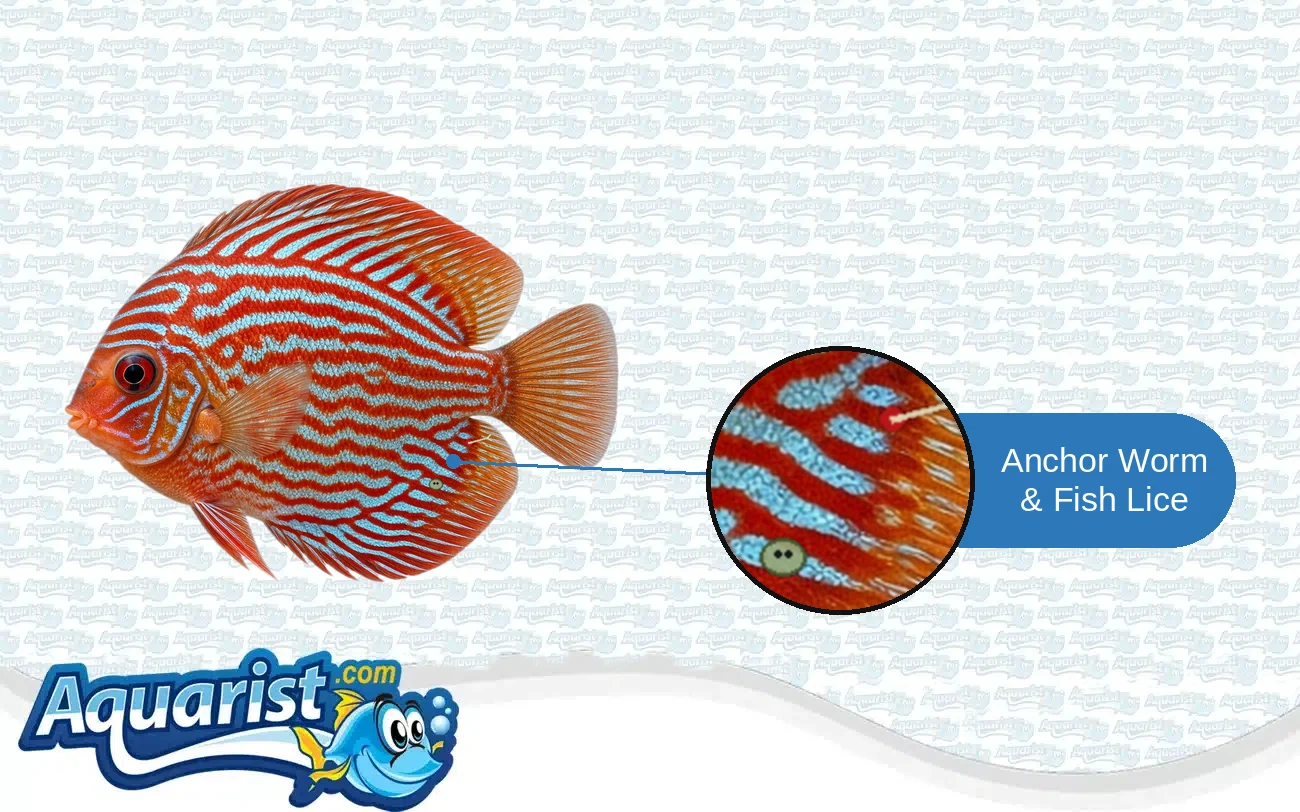
What it is
Anchor worms (Lernaea) and fish lice (Argulus) are crustacean parasites big enough to see with the naked eye. They are most common in goldfish and pond fish but can turn up in aquariums.
Signs to look for
- Thin threads sticking out of the skin, sometimes with a red spot at the base
- Flat, round lice moving on the body
- Scratching and flashing
- Red, sore patches
Treatment
- Remove visible parasites gently with tweezers if you are confident.
- Treat the tank with a crustacean parasite remedy such as one containing emamectin or diflubenzuron.
- Repeat to catch eggs as they hatch.
Prevention
- Quarantine new fish and plants.
- Avoid adding wild-collected live food or pond water.
Please note: This guide is general information, not a diagnosis. Always follow the medication's label for dose and duration, treat in a separate hospital tank when you can, and ask a fish vet if you're unsure.
Body Flukes
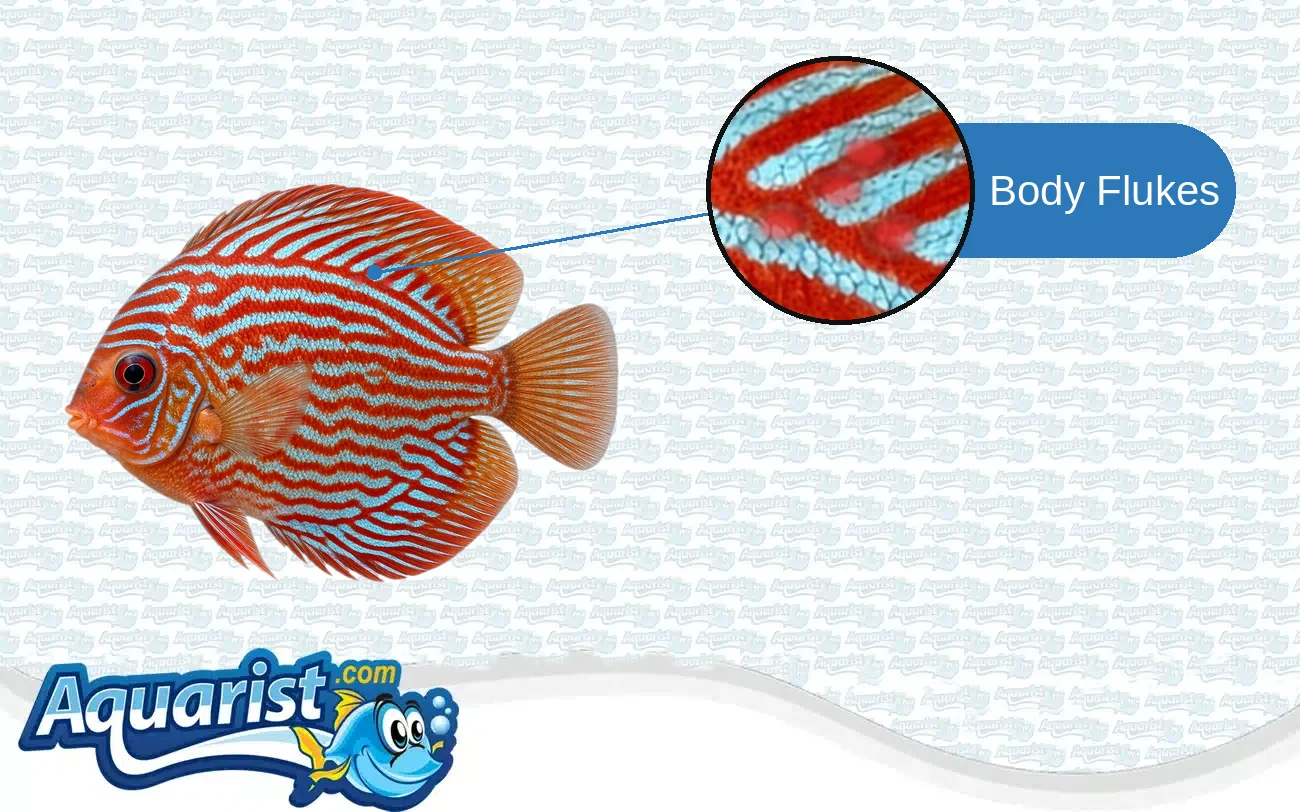
What it is
Body flukes (Gyrodactylus) are tiny flatworms that crawl over the skin and fins, feeding on mucus and tissue. They give birth to live young, so numbers can climb fast in a crowded tank.
Signs to look for
- Small red or irritated patches on the skin
- Excess slime, giving a cloudy look
- Flashing and rubbing against decor
- Frayed or clamped fins
Treatment
- Treat with praziquantel at the label dose.
- Repeat after about a week.
- Do a partial water change and vacuum the gravel before each dose.
Prevention
- Quarantine every new fish.
- Avoid overcrowding.
Please note: This guide is general information, not a diagnosis. Always follow the medication's label for dose and duration, treat in a separate hospital tank when you can, and ask a fish vet if you're unsure.
Camallanus and Other Worms
What it is
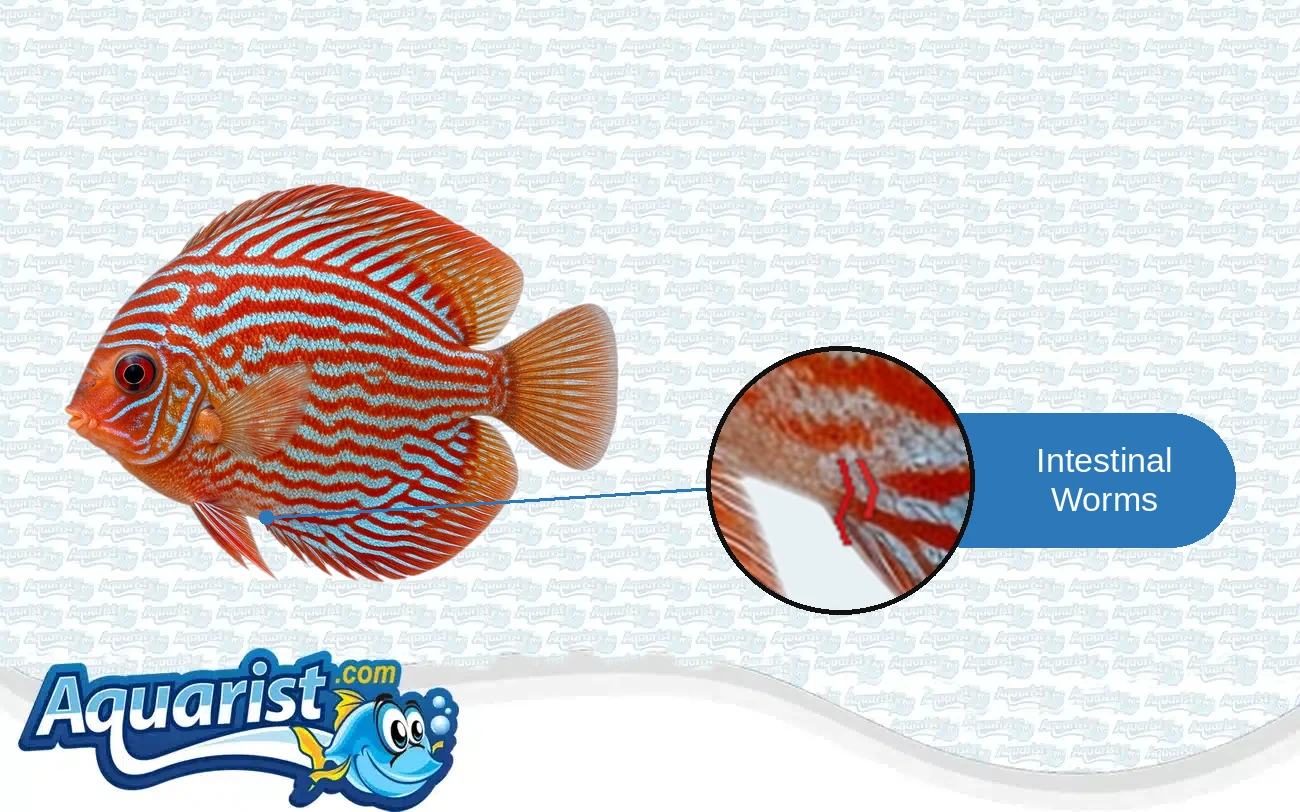
Camallanus is a red roundworm that lives in the gut and pokes out of the vent. Livebearers such as guppies and Endler’s guppies commonly bring it in. Tapeworms and other internal worms also occur, especially in wild-caught fish.
Signs to look for
- Thin red threads sticking out of the vent
- A sunken belly even when the fish eats well
- Slow growth and lethargy
- Stringy or unusual feces
Treatment
- Treat with levamisole or fenbendazole, the usual choices for roundworms.
- Use praziquantel for tapeworms.
- Repeat treatment after 2 to 3 weeks to catch hatching eggs.
- Vacuum the gravel well after each dose.
Prevention
- Quarantine and deworm new livebearers.
- Avoid feeding live foods from unknown sources.
Please note: This guide is general information, not a diagnosis. Always follow the medication's label for dose and duration, treat in a separate hospital tank when you can, and ask a fish vet if you're unsure.
Columnaris
What it is
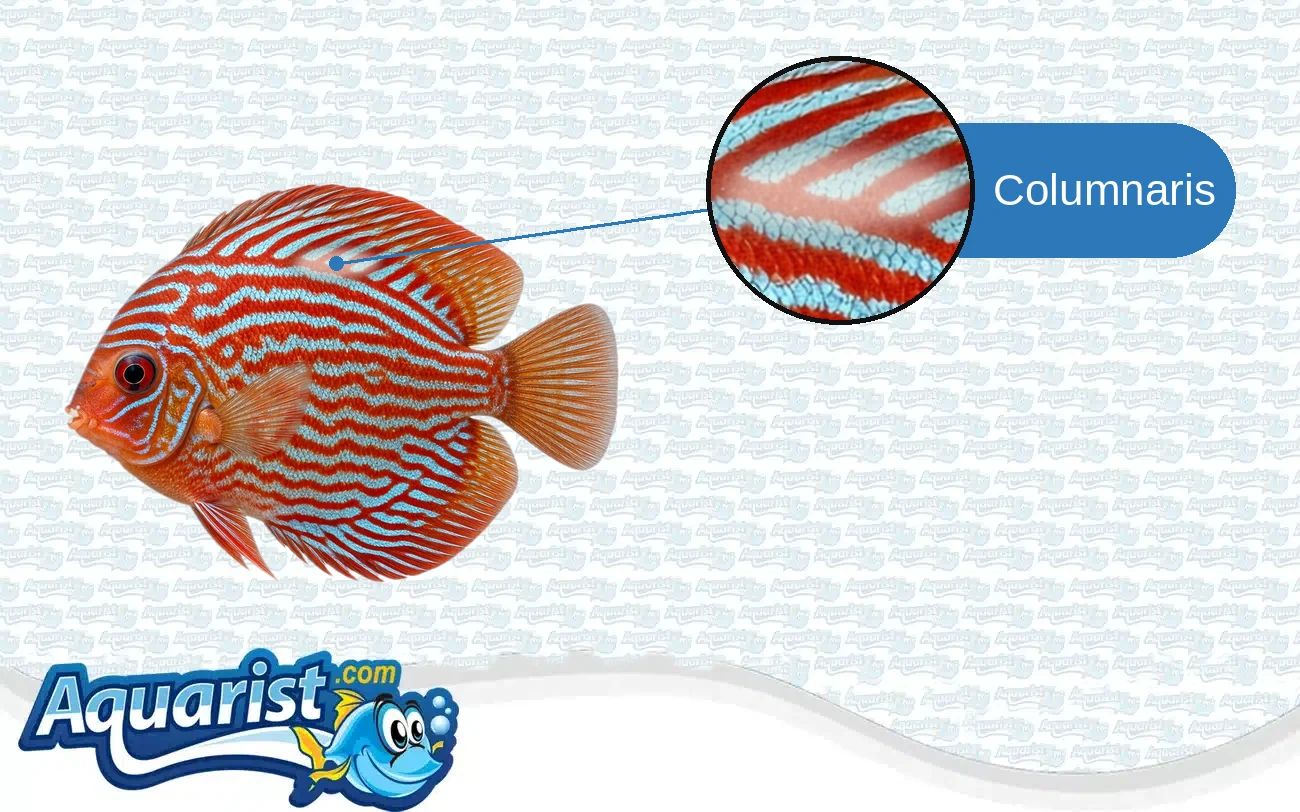
Columnaris is a bacterial infection caused by Flavobacterium columnare. It is sometimes called cotton-wool disease because it can look fuzzy, but it is not a fungus. Warm water, stress and poor water quality make outbreaks far worse, and some strains kill within a day.
Signs to look for
- Grayish-white patches on the back, often called saddleback
- White or fuzzy edges on the lips, fins or gills
- Frayed fins and fast breathing
- Fast spread through livebearers such as mollies and guppies
Treatment
- Do a 25 to 50% water change right away.
- Lower the temperature a few degrees, to about 75°F (24°C), if the fish can tolerate it; warmth helps the bacteria.
- Treat with an antibacterial such as kanamycin or a nitrofurazone product, ideally in a hospital tank.
- A little aquarium salt helps livebearers, but skip it for salt-sensitive fish.
Prevention
- Don't overstock and keep nitrate low.
- Quarantine new fish, especially livebearers.
Please note: This guide is general information, not a diagnosis. Always follow the medication's label for dose and duration, treat in a separate hospital tank when you can, and ask a fish vet if you're unsure.
Costia
What it is
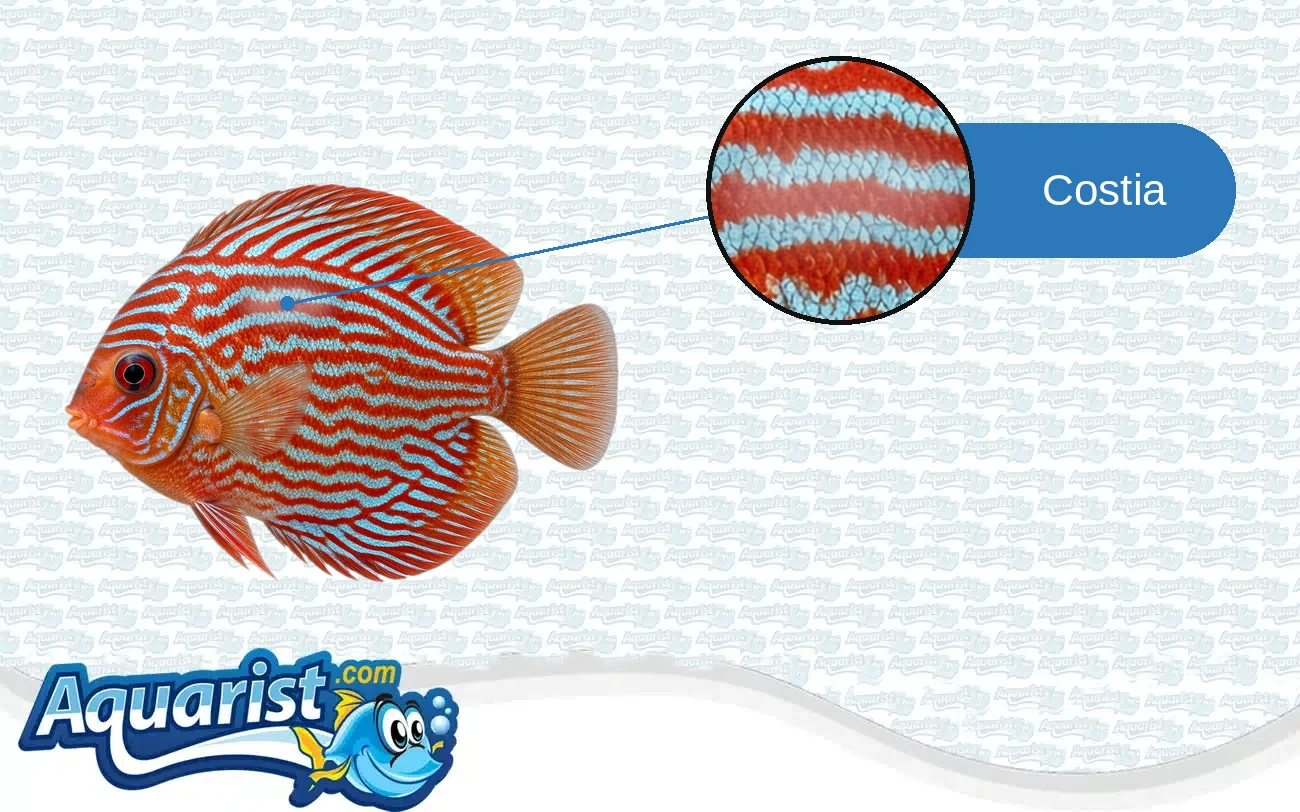
Costia (Ichthyobodo) is a tiny flagellate parasite that feeds on skin cells. It is too small to see, but the fish's skin reacts by producing extra slime, which gives the body a dull gray or bluish sheen. Young and weak fish can go downhill quickly.
Signs to look for
- A gray-blue, milky film over the body
- Clamped fins and scratching
- Rapid breathing if the gills are affected
- Weight loss in long-running cases
Treatment
- Formalin-based or malachite green parasite treatments at the label dose work well.
- Salt treatment helps tolerant species.
- Raise the temperature gently toward 82°F (28°C) if the fish can handle it; costia prefers cooler water.
Prevention
- Quarantine new fish.
- Keep water stable and avoid chilling.
Please note: This guide is general information, not a diagnosis. Always follow the medication's label for dose and duration, treat in a separate hospital tank when you can, and ask a fish vet if you're unsure.
Dropsy
What it is
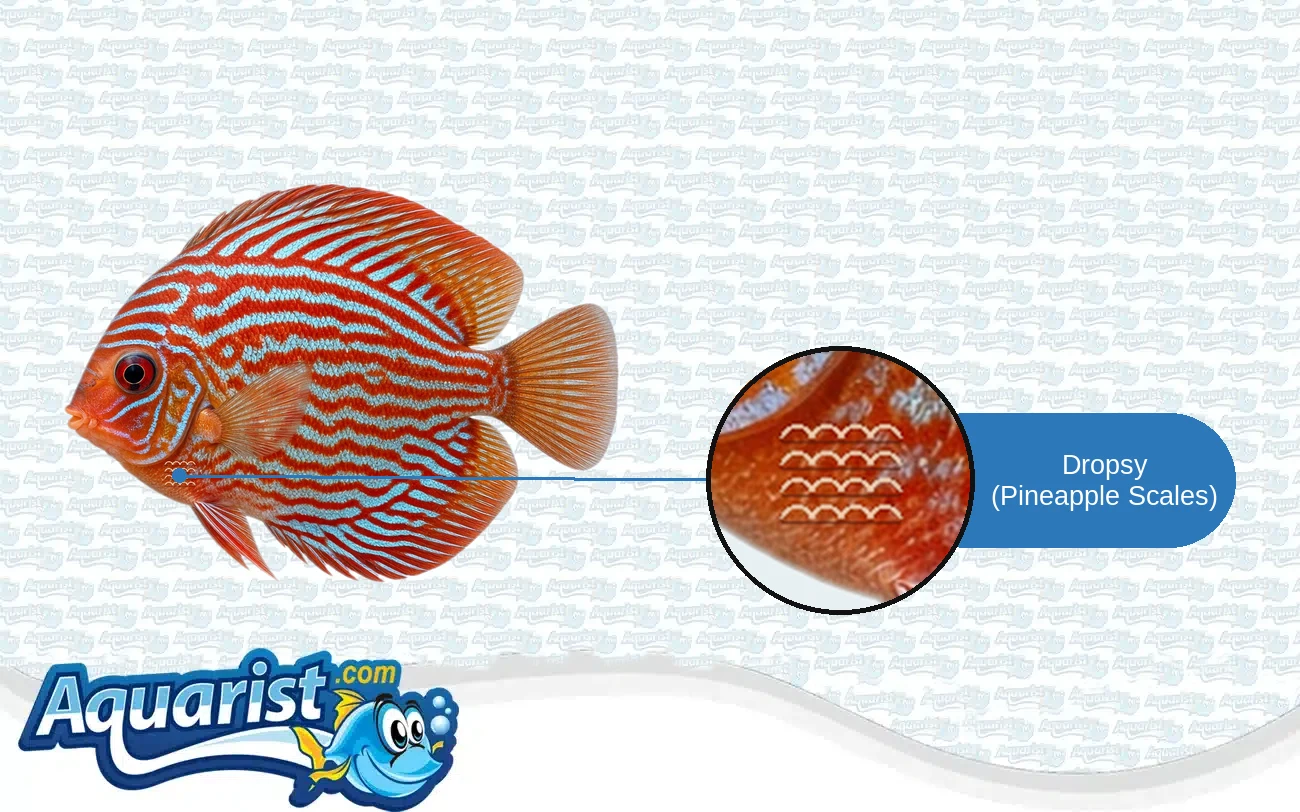
Dropsy is a sign rather than a single disease: fluid builds up inside the body, usually because of organ failure caused by bacterial infection. Scales lift away from the body and stick out like a pine cone. Caught early it can sometimes be treated, but advanced cases rarely recover.
Signs to look for
- Swollen belly
- Scales standing out like a pine cone when viewed from above
- Bulging eyes, pale gills, stringy feces
- Hiding and refusing food
Treatment
- Move the fish to a hospital tank straight away.
- Epsom salt at about 1/8 teaspoon per gallon (about 0.2 g per liter) can help draw out fluid.
- Use a broad-spectrum antibiotic food or bath for internal infection.
- If the fish is suffering with no improvement, humane euthanasia is the kind choice.
Prevention
- Feed a varied, quality diet and avoid overfeeding.
- Keep water parameters steady and nitrate low.
Please note: This guide is general information, not a diagnosis. Always follow the medication's label for dose and duration, treat in a separate hospital tank when you can, and ask a fish vet if you're unsure.
Eye Fluke
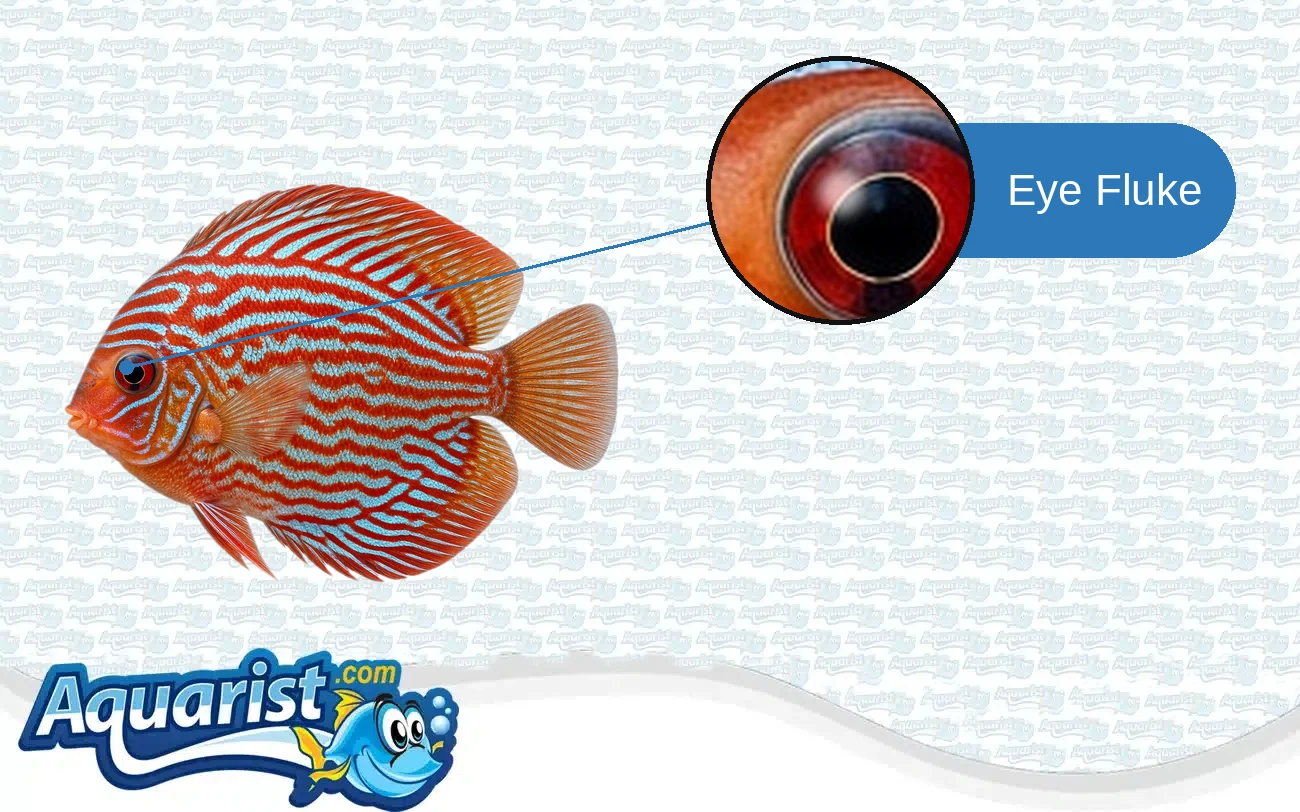
What it is
Eye flukes are the larval stage of Diplostomum and related flatworms. They lodge inside the eye, usually the lens, after the fish meets snails or birds carrying the parasite. They are more common in pond fish and wild-caught fish than in established aquariums.
Signs to look for
- A milky or white spot inside the eye
- One or both eyes slowly turning cloudy
- Poor vision: missing food or bumping into decor
Treatment
- Praziquantel at the label dose is the usual choice, though flukes deep in the lens are hard to reach.
- Keep water very clean while the eye recovers.
- Damage already done to the lens may not fully clear.
Prevention
- Quarantine new fish, especially pond and wild-caught stock.
- Avoid adding wild snails to your aquarium.
Please note: This guide is general information, not a diagnosis. Always follow the medication's label for dose and duration, treat in a separate hospital tank when you can, and ask a fish vet if you're unsure.
Fin Hemorrhaging
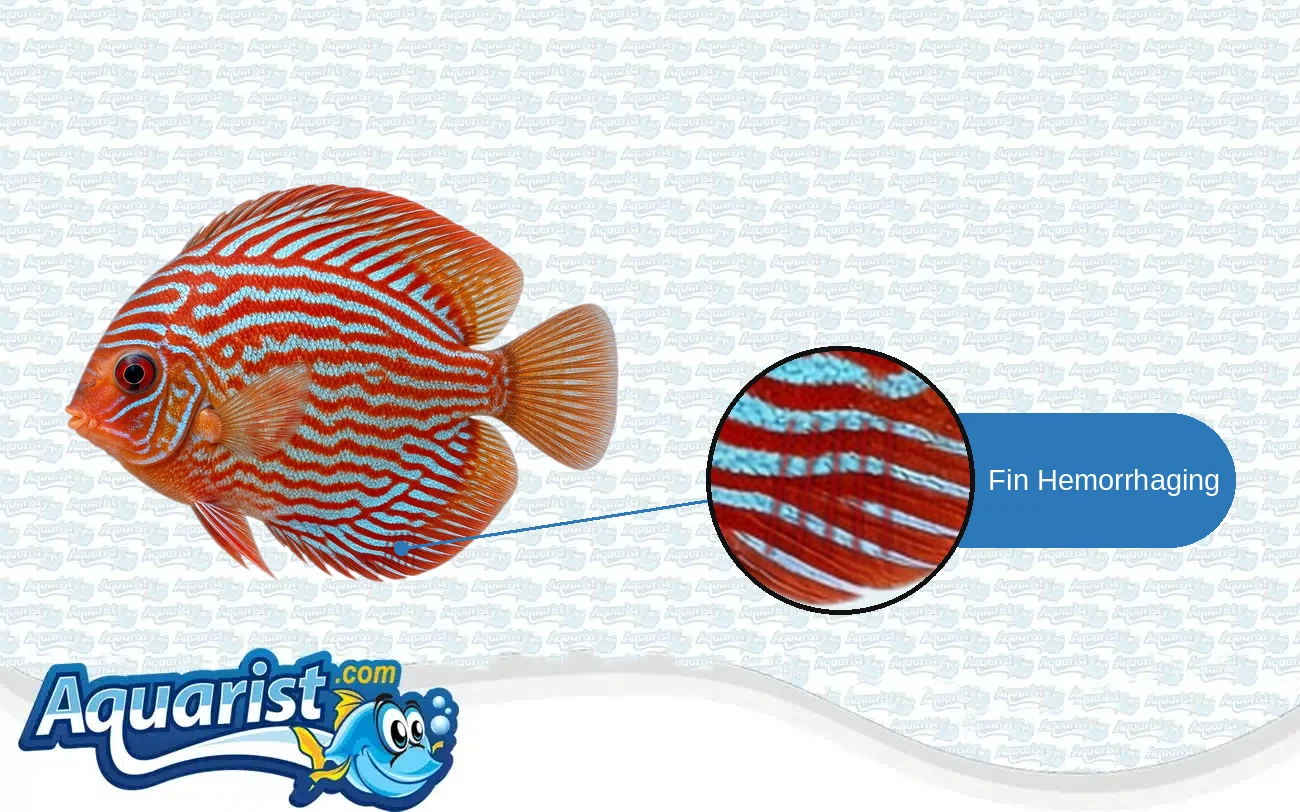
What it is
Red streaks or blotches in the fins mean tiny blood vessels are bursting. It is a sign of stress, poor water quality (often ammonia) or a bacterial infection rather than a disease of its own.
Signs to look for
- Red streaks running through the fins
- Red patches at the fin base
- Clamped fins and lethargy
Treatment
- Test for ammonia, nitrite and nitrate and fix any problem with water changes.
- If streaks spread or the fish looks ill, use an antibacterial treatment.
- Remove any source of stress, such as aggressive tank mates.
Prevention
- Keep the tank well cycled and maintained.
- Avoid sudden changes in water chemistry.
Please note: This guide is general information, not a diagnosis. Always follow the medication's label for dose and duration, treat in a separate hospital tank when you can, and ask a fish vet if you're unsure.
Fin Rot
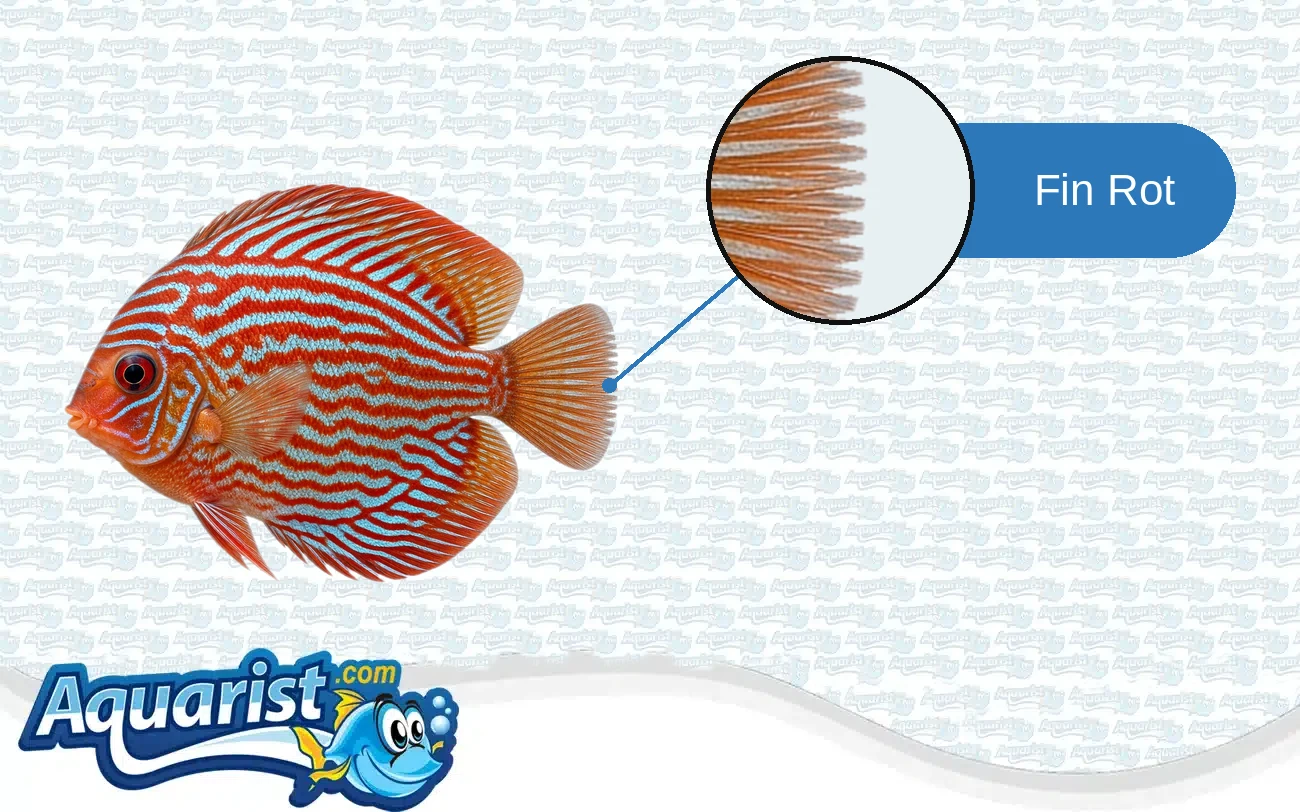
What it is
Fin rot is a bacterial infection that eats away the fins and tail. It almost always follows stress, fin nipping or poor water quality, so fixing the cause matters as much as the medicine. Long-finned fish such as bettas and fancy guppies are most prone.
Signs to look for
- Ragged, shortened or frayed fins
- White, black or red edges where the fin is breaking down
- Red streaks or inflammation at the fin base
- Lethargy if the infection spreads to the body
Treatment
- Test the water and fix any ammonia, nitrite or high nitrate first.
- Do daily or every-other-day partial water changes for a week.
- Mild cases often heal with clean water alone; moderate cases respond to antibacterial treatments.
- Separate fin nippers or the victim.
Prevention
- Keep up with weekly water changes.
- Check tank mates are compatible; see our compatibility chart.
Please note: This guide is general information, not a diagnosis. Always follow the medication's label for dose and duration, treat in a separate hospital tank when you can, and ask a fish vet if you're unsure.
Fungus (Saprolegnia)

What it is
True fungus, usually Saprolegnia, attacks fish that are already injured or weakened. It grows as white or gray cotton-like tufts on wounds, fins or eggs.
Signs to look for
- White or gray cotton-like tufts on the body or fins
- Tufts that may turn green or brown as they trap debris
- Patches growing on wounds or uneaten eggs
Treatment
- Treat with an antifungal product such as methylene blue or a fungus-labeled remedy.
- Aquarium salt helps fish that tolerate it.
- Gently remove dead tissue only if experienced; otherwise let medication work.
- Fix the cause of the wound or stress.
Prevention
- Avoid injuries from sharp decor and aggressive tank mates.
- Remove uneaten food and dead fish promptly.
Please note: This guide is general information, not a diagnosis. Always follow the medication's label for dose and duration, treat in a separate hospital tank when you can, and ask a fish vet if you're unsure.
Gill Flukes
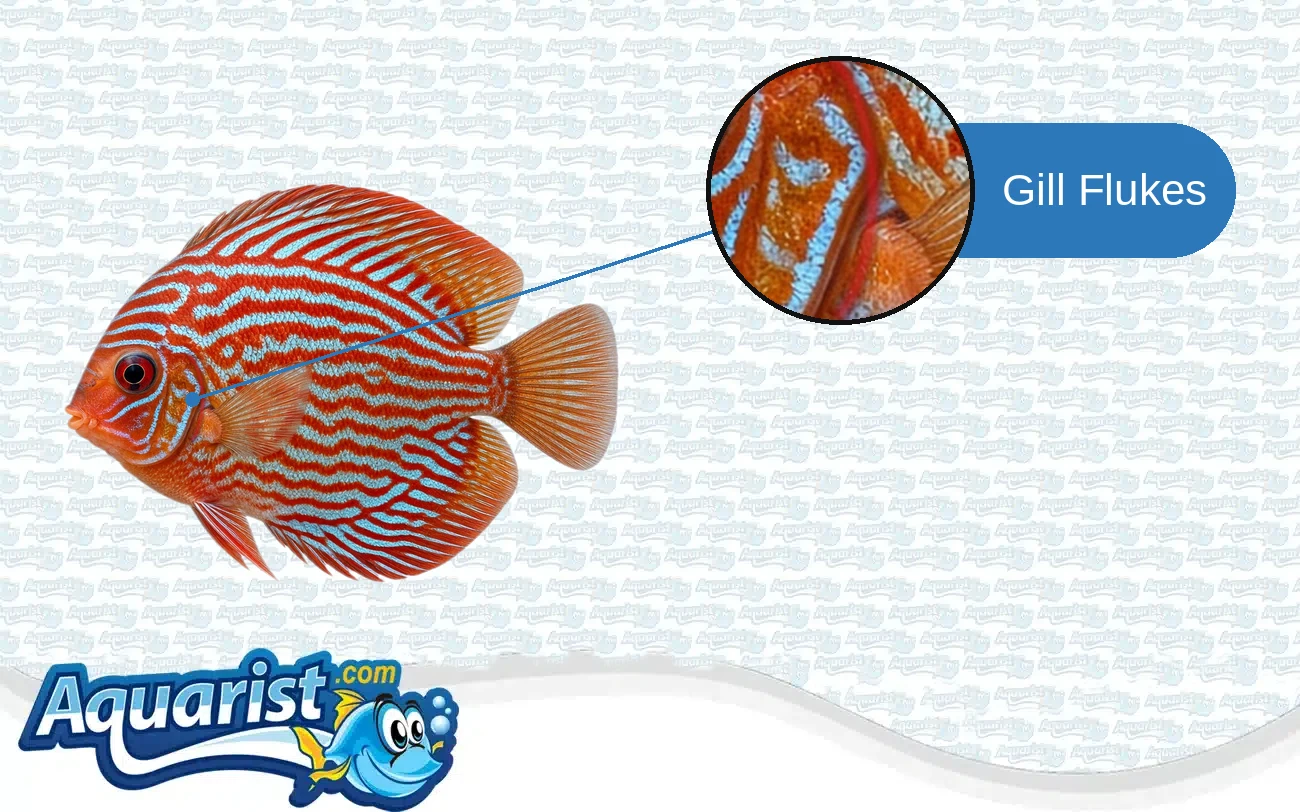
What it is
Gill flukes (Dactylogyrus) are tiny flatworms that attach to the gills and feed on tissue. In large numbers they make breathing very hard and open the door to infection.
Signs to look for
- Rapid breathing, gasping at the surface
- Gills held open or red and swollen
- Scratching the head or gills on objects
- Pale color and lethargy
Treatment
- Treat with praziquantel at the label dose.
- Repeat after about 7 days to kill newly hatched flukes.
- Increase aeration while treating.
Prevention
- Quarantine new fish and consider a preventive praziquantel dose.
- Keep water clean and avoid overcrowding.
Please note: This guide is general information, not a diagnosis. Always follow the medication's label for dose and duration, treat in a separate hospital tank when you can, and ask a fish vet if you're unsure.
Hexamita (Internal Parasites)
What it is
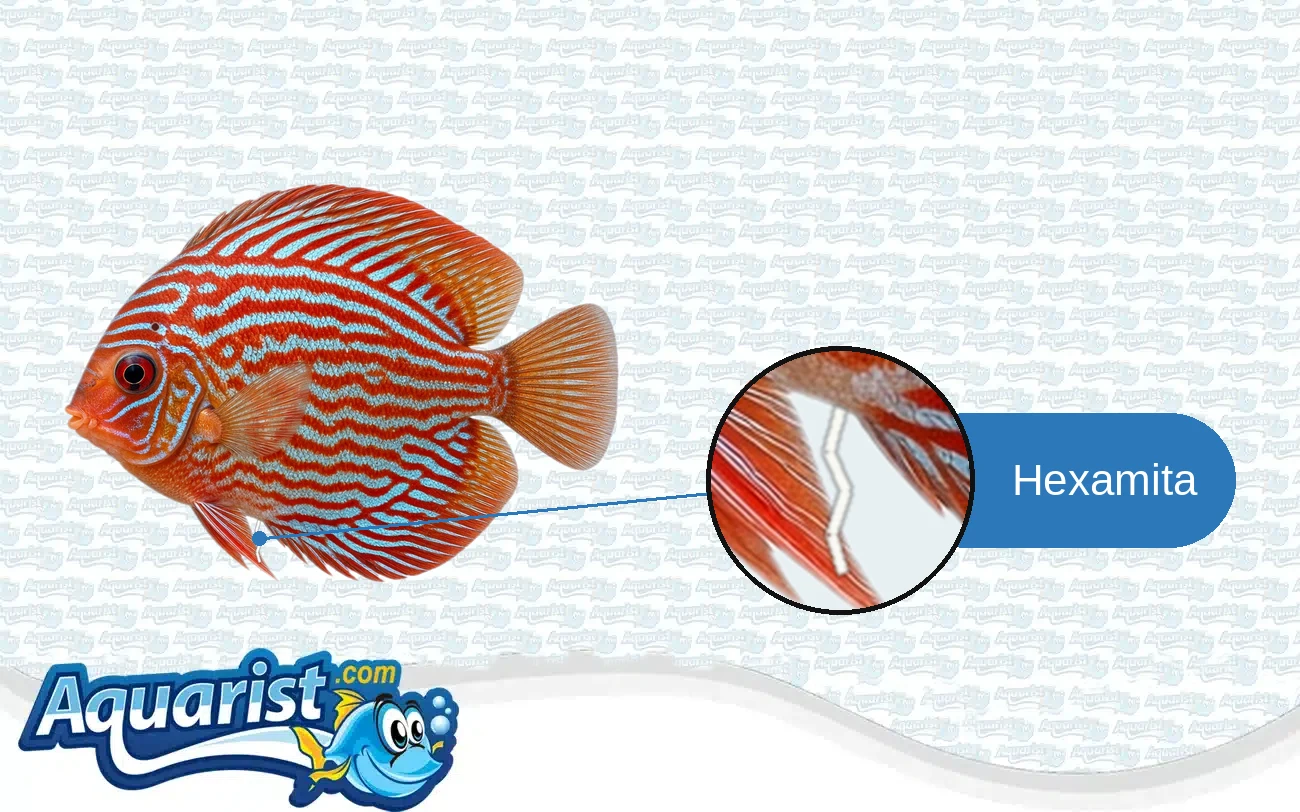
Hexamita and related flagellates live in the gut. Small numbers can be harmless, but stress lets them multiply. They are common in cichlids, especially discus and German blue rams, and often link to hole-in-the-head.
Signs to look for
- White, stringy, mucus-like feces
- Weight loss despite eating
- Darkened color and hiding
- Spitting out food
Treatment
- Treat with metronidazole, ideally mixed into food.
- If the fish will not eat, dose the water in a hospital tank.
- Do frequent water changes during treatment.
Prevention
- Keep water quality high and stress low.
- Feed a varied diet and avoid overfeeding.
Please note: This guide is general information, not a diagnosis. Always follow the medication's label for dose and duration, treat in a separate hospital tank when you can, and ask a fish vet if you're unsure.
Hole-in-the-Head (HLLE)
What it is
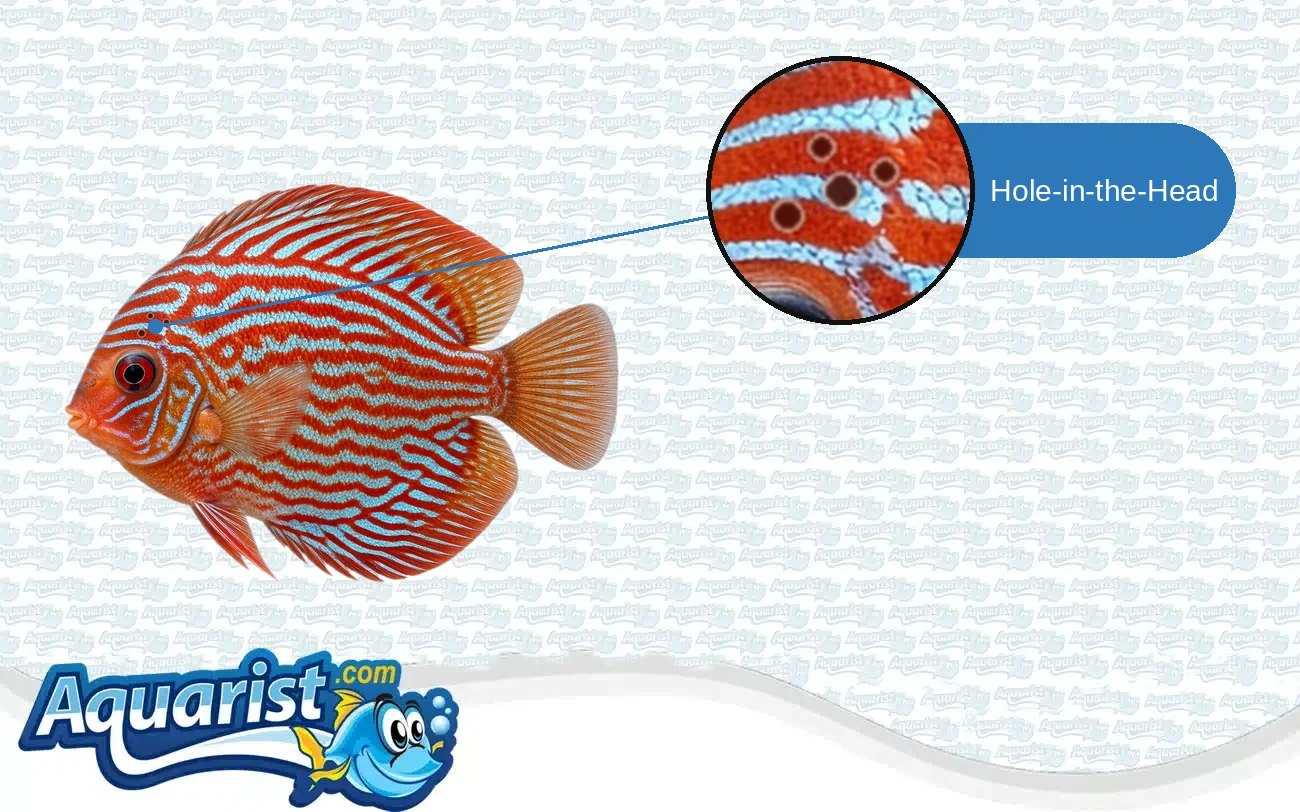
Hole-in-the-head shows up as pits or sores on the head and along the lateral line. It is linked with the parasite Hexamita, poor diet and long-term poor water quality. Large cichlids such as oscars and discus are most often affected.
Signs to look for
- Small pits or holes on the head that grow over time
- Lesions along the lateral line
- White, stringy feces
- Loss of color and appetite
Treatment
- Do large water changes and keep nitrate low.
- Treat with metronidazole, ideally soaked into food.
- Improve the diet with vitamin-rich foods.
- Remove activated carbon if it is suspected as a trigger.
Prevention
- Feed a varied, vitamin-rich diet.
- Keep up with water changes, especially in large cichlid tanks.
Please note: This guide is general information, not a diagnosis. Always follow the medication's label for dose and duration, treat in a separate hospital tank when you can, and ask a fish vet if you're unsure.
Lymphocystis
What it is
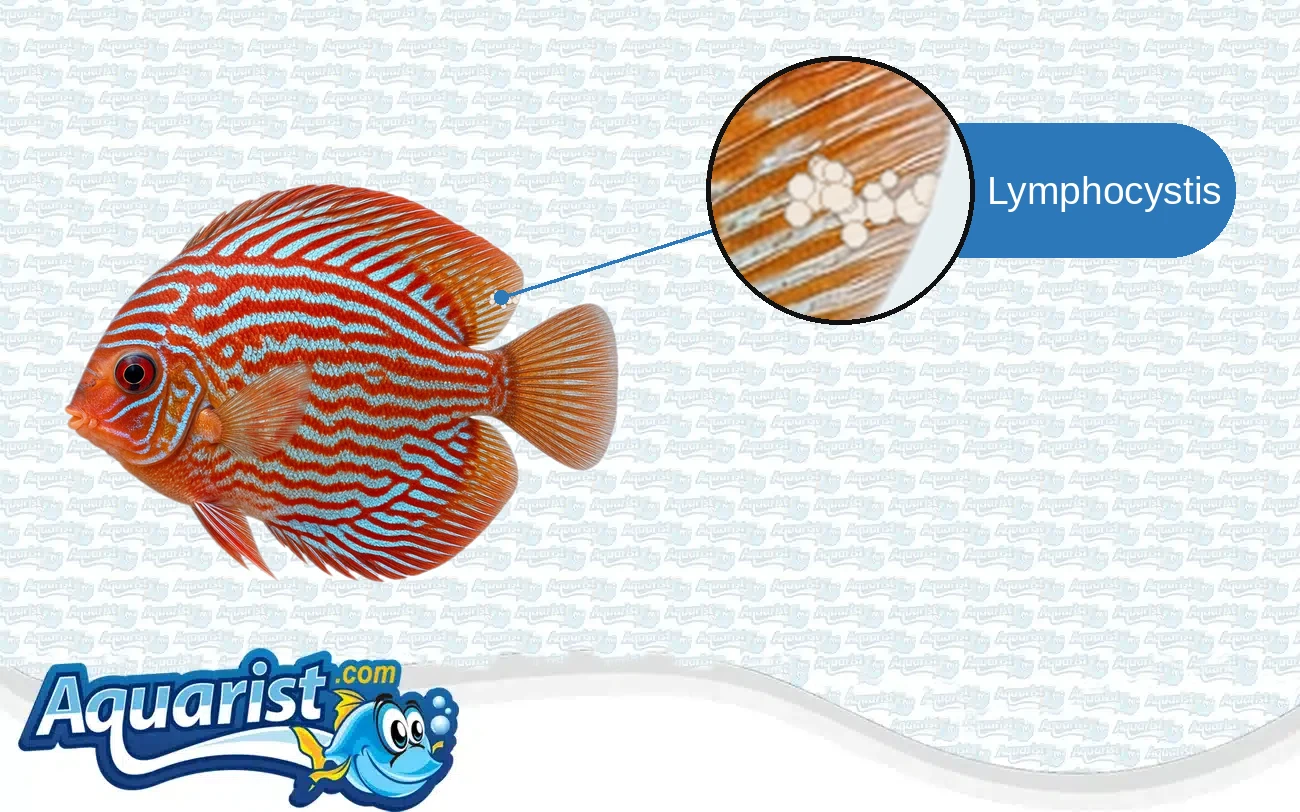
Lymphocystis is a viral infection that makes skin cells swell into white or pinkish lumps, often on the fins. It looks alarming but is rarely fatal, and it usually clears on its own once stress is removed.
Signs to look for
- White, cauliflower-like lumps on the fins or body
- Lumps that grow slowly over weeks
- Fish that otherwise act normal
Treatment
- There is no medication for the virus itself.
- Keep water quality excellent and feed a varied diet.
- Lumps normally shrink and drop off within a few weeks to months.
- Watch for bacterial infection where lumps break open.
Prevention
- Keep stress low with stable water and good tank mates.
- Quarantine new fish.
Please note: This guide is general information, not a diagnosis. Always follow the medication's label for dose and duration, treat in a separate hospital tank when you can, and ask a fish vet if you're unsure.
Malawi Bloat
What it is
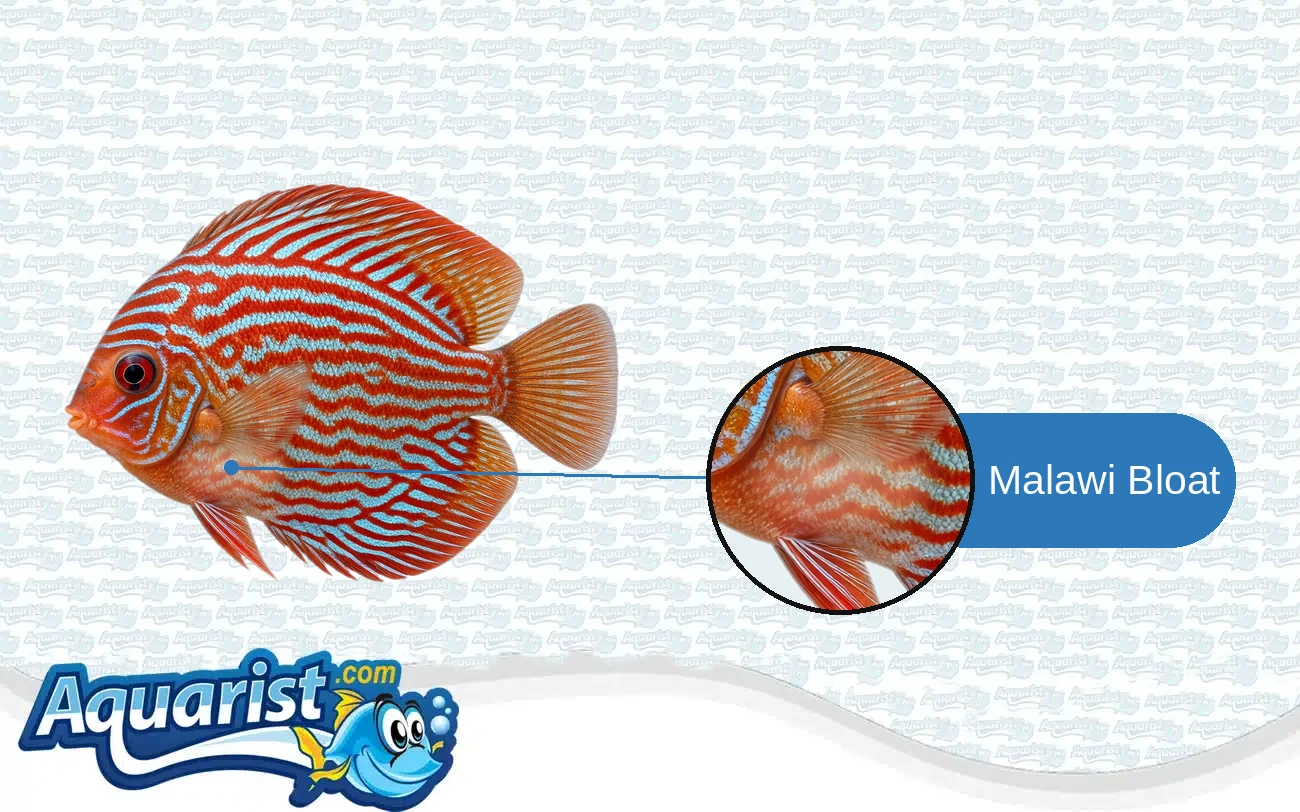
Malawi bloat affects African rift lake cichlids, especially plant-eating mbuna such as Kenyi, electric yellow and frontosa. It is linked with too much protein, stress and gut infection. Without early treatment it is often fatal.
Signs to look for
- Loss of appetite, often the first sign
- Swollen belly
- Rapid breathing
- White, stringy feces and hiding
Treatment
- Start metronidazole treatment as soon as appetite drops.
- Stop feeding during the first days.
- Do partial water changes and keep the temperature steady.
Prevention
- Feed plant-based foods to herbivorous mbuna.
- Avoid high-protein foods such as bloodworms for these species.
- Keep water hard and alkaline as these fish need.
Please note: This guide is general information, not a diagnosis. Always follow the medication's label for dose and duration, treat in a separate hospital tank when you can, and ask a fish vet if you're unsure.
Mouth Fungus
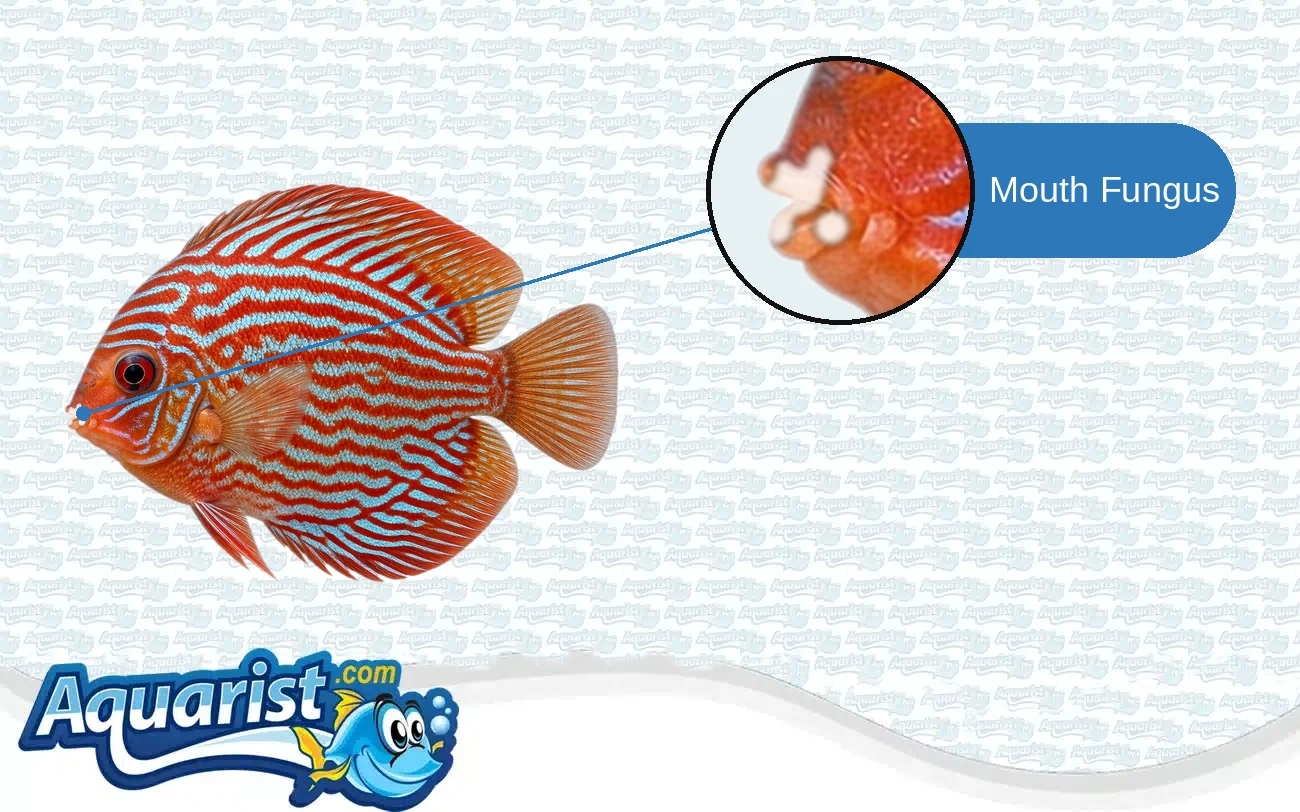
What it is
Despite its name, mouth fungus is usually a columnaris bacterial infection centered on the mouth and lips. It needs antibacterial treatment, not antifungal medicine, and it moves quickly.
Signs to look for
- White, cottony patches around the mouth
- Eroded or swollen lips
- Trouble eating
- Patches spreading to the head and gills
Treatment
- Treat with a columnaris-strength antibacterial in a hospital tank.
- Do frequent partial water changes.
- Lower the temperature slightly if the species allows.
Prevention
- Keep water clean and quarantine new fish.
- Avoid overcrowding.
Please note: This guide is general information, not a diagnosis. Always follow the medication's label for dose and duration, treat in a separate hospital tank when you can, and ask a fish vet if you're unsure.
Neon Tetra Disease
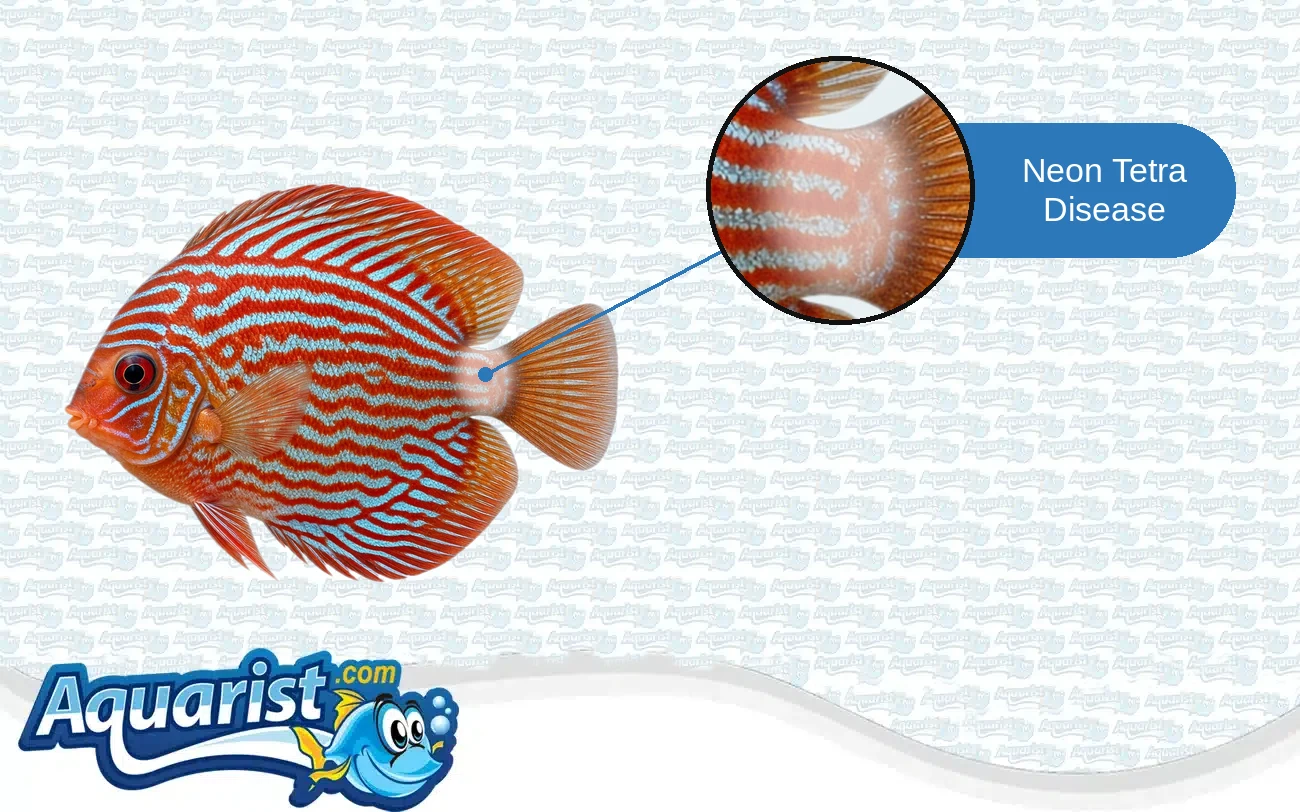
What it is
Neon tetra disease is caused by the microsporidian parasite Pleistophora hyphessobryconis. It infects muscle tissue and is usually picked up from eating infected dead fish. It mainly affects neon tetras but can reach cardinal tetras, rasboras and barbs.
Signs to look for
- Pale or white patches in the muscle, often fading the blue stripe
- Restless swimming, especially at night
- A curved spine as the disease goes on
- Separation from the school
Treatment
- There is no reliable cure.
- Remove affected fish quickly to protect the rest of the school.
- Humane euthanasia is often the kindest option.
- Watch the rest closely for weeks.
Prevention
- Buy healthy fish and quarantine them.
- Remove dead fish right away so others can't eat them.
Please note: This guide is general information, not a diagnosis. Always follow the medication's label for dose and duration, treat in a separate hospital tank when you can, and ask a fish vet if you're unsure.
Pop-Eye
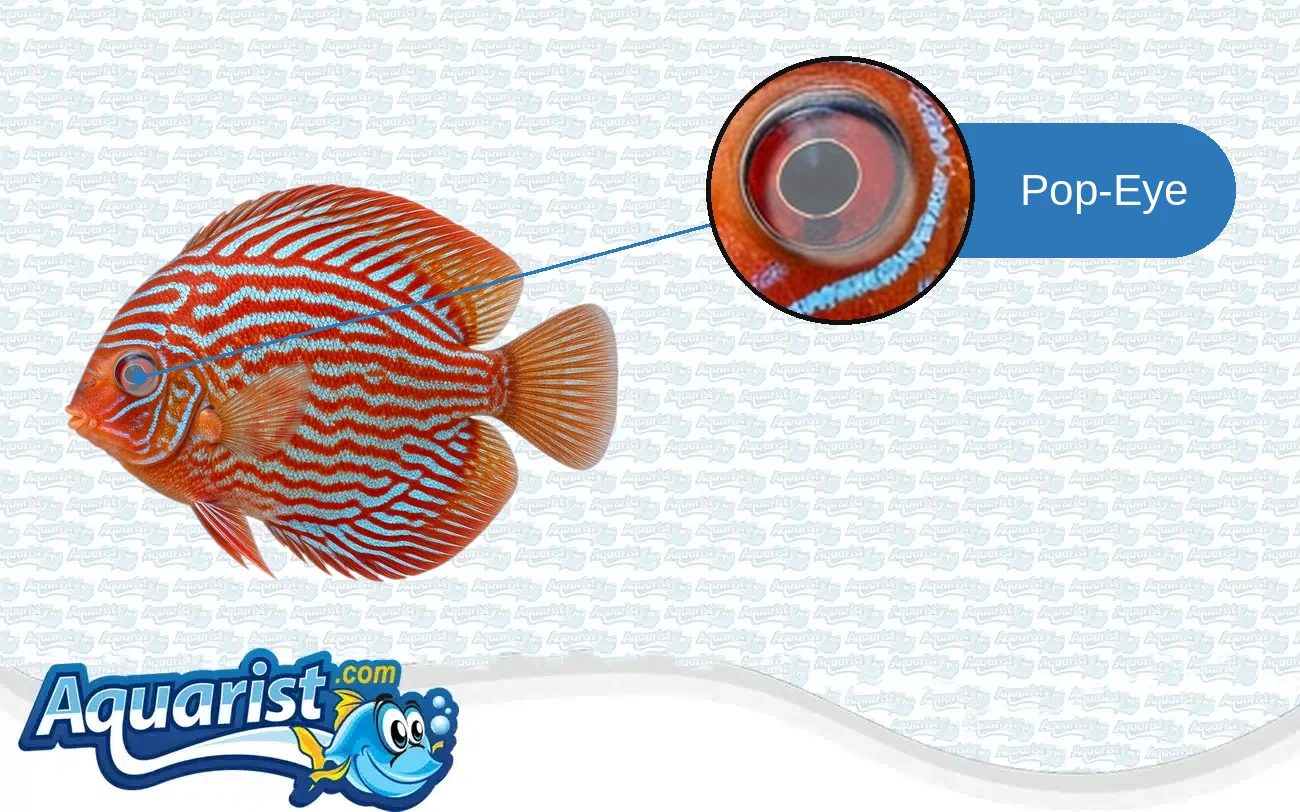
What it is
Pop-eye (exophthalmia) is when one or both eyes bulge out of the head. One eye alone usually means injury; both eyes usually point to infection or poor water quality.
Signs to look for
- One or both eyes bulging
- Cloudy eyes
- A white ring around the eye in some cases
Treatment
- Improve water quality with partial water changes.
- Epsom salt at about 1/8 teaspoon per gallon (about 0.2 g per liter) can reduce swelling.
- Use an antibiotic if both eyes are affected or it gets worse.
- Remove sharp decor if the cause is injury.
Prevention
- Handle fish carefully and avoid sharp decor.
- Keep water clean and stable.
Please note: This guide is general information, not a diagnosis. Always follow the medication's label for dose and duration, treat in a separate hospital tank when you can, and ask a fish vet if you're unsure.
Swim Bladder Disorder
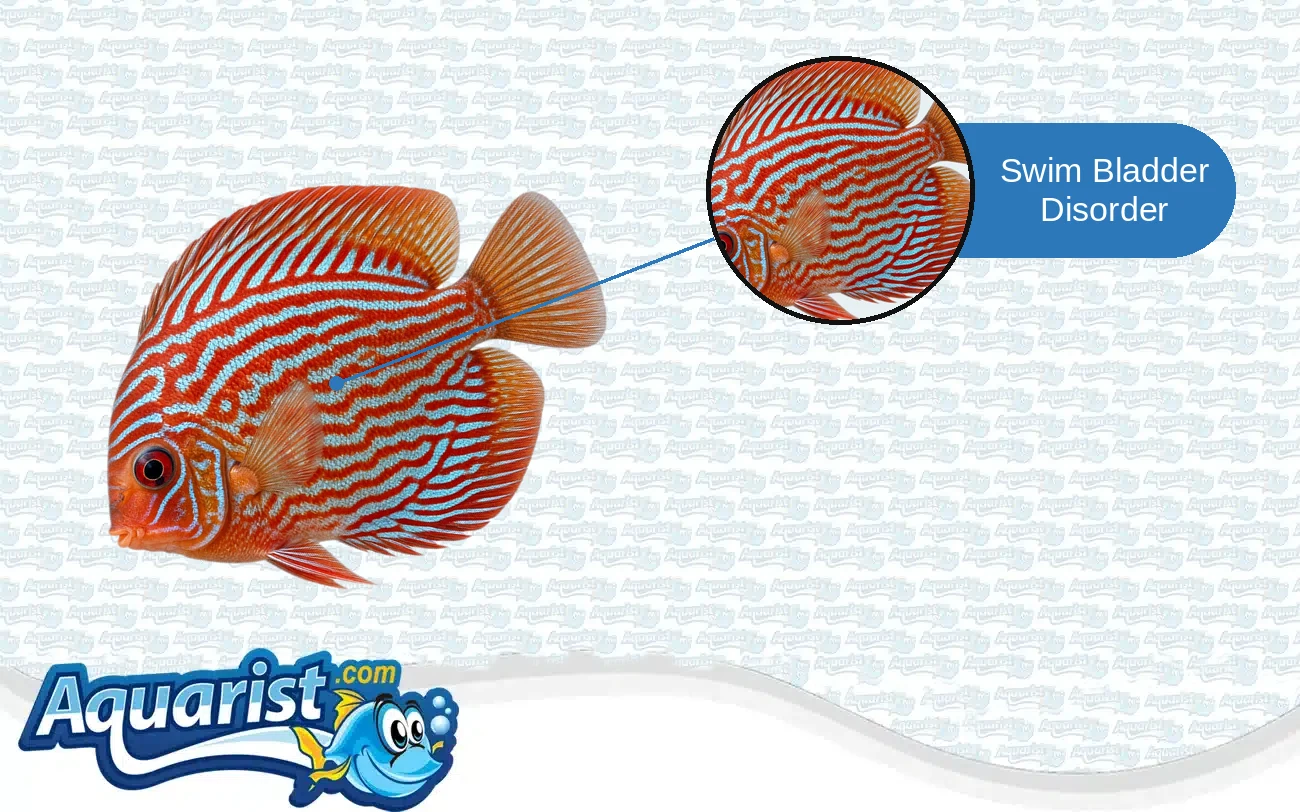
What it is
The swim bladder controls buoyancy. When it is squeezed by a full gut, injured or infected, fish struggle to stay level. Round-bodied fish such as fancy goldfish, balloon mollies and bettas are especially prone.
Signs to look for
- Floating at the surface or sinking to the bottom
- Swimming on the side, head down or tail up
- Swollen belly after eating
- Struggling to hold position
Treatment
- Fast the fish for 2 to 3 days.
- Then offer a skinned, cooked pea or daphnia to help clear the gut.
- Lower the water level and keep the temperature steady.
- If it continues for more than a week, consider an antibacterial treatment for infection.
Prevention
- Soak dry foods before feeding and avoid overfeeding.
- Offer sinking food to fish that gulp air at the surface.
Please note: This guide is general information, not a diagnosis. Always follow the medication's label for dose and duration, treat in a separate hospital tank when you can, and ask a fish vet if you're unsure.
Ulcers and Red Sores
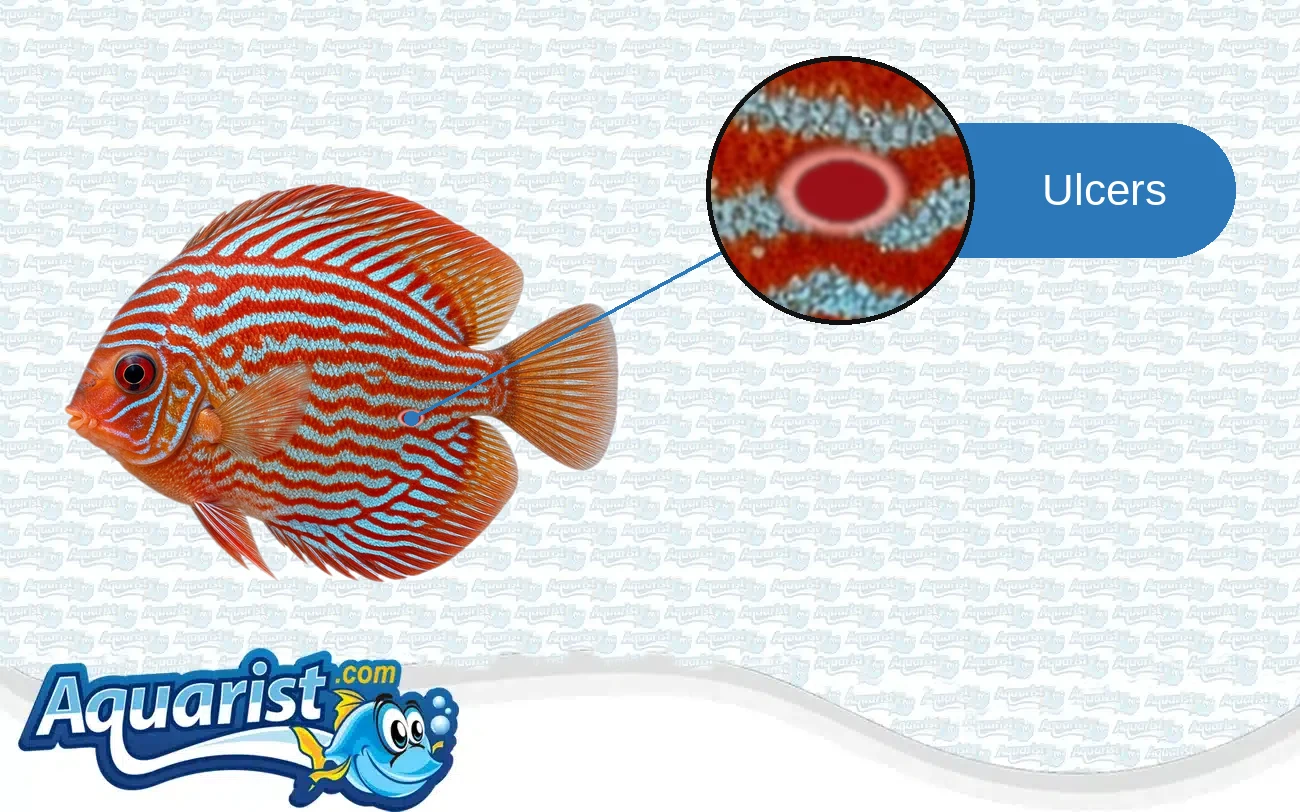
What it is
Open red sores are usually caused by Aeromonas or Pseudomonas bacteria, which take hold when fish are stressed or water quality slips. Goldfish and koi are often affected, but any fish can get them.
Signs to look for
- Red, open sores on the body
- Raised scales around the wound
- Red streaks in the fins
- Lethargy and loss of appetite
Treatment
- Fix water quality with water changes.
- Treat with an antibacterial medication or medicated food.
- Move badly affected fish to a hospital tank.
Prevention
- Keep nitrate low and the tank clean.
- Quarantine new fish.
Please note: This guide is general information, not a diagnosis. Always follow the medication's label for dose and duration, treat in a separate hospital tank when you can, and ask a fish vet if you're unsure.
Velvet (Piscinoodinium)
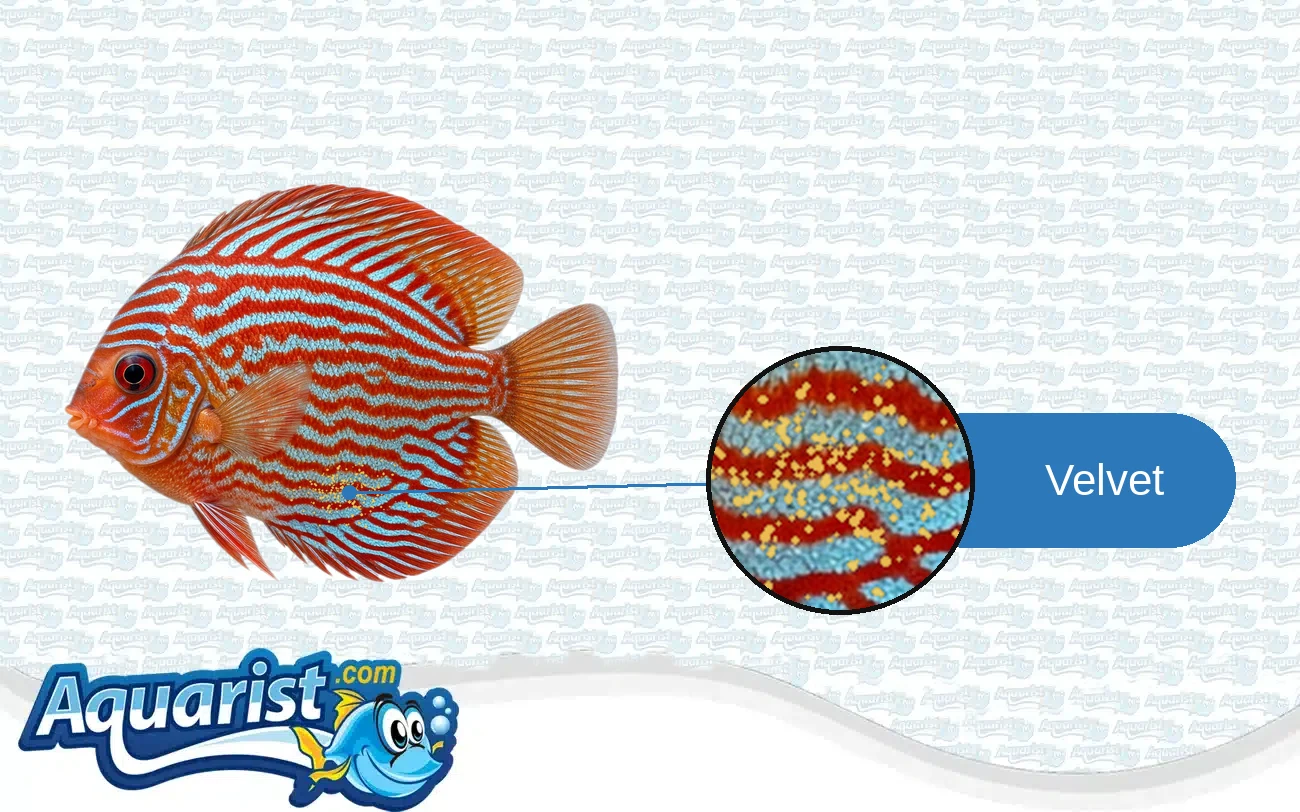
What it is
Velvet is caused by Piscinoodinium pillulare, a parasitic dinoflagellate that clings to skin and gills. It is smaller than ich and harder to spot, and it can spread through a tank fast. Bettas, gouramis, danios and many tetras are commonly affected.
Signs to look for
- Fine gold or rusty dust on the skin, easiest to see with a flashlight from the side
- Rapid breathing and fish hanging near the surface
- Clamped fins, scratching, loss of appetite
- Peeling skin in advanced cases
Treatment
- Dim the lights or cover the tank for the treatment period; the parasite relies partly on light.
- Use a copper-based or velvet-labeled medication at the label dose. Avoid copper with invertebrates.
- Raise temperature gently to about 80 to 82°F (27 to 28°C) where suitable.
- Treat for at least 10 to 14 days and keep extra aeration running.
Prevention
- Quarantine all new arrivals.
- Keep water clean and stable to keep immune systems strong.
Please note: This guide is general information, not a diagnosis. Always follow the medication's label for dose and duration, treat in a separate hospital tank when you can, and ask a fish vet if you're unsure.
White Spot (Ich)
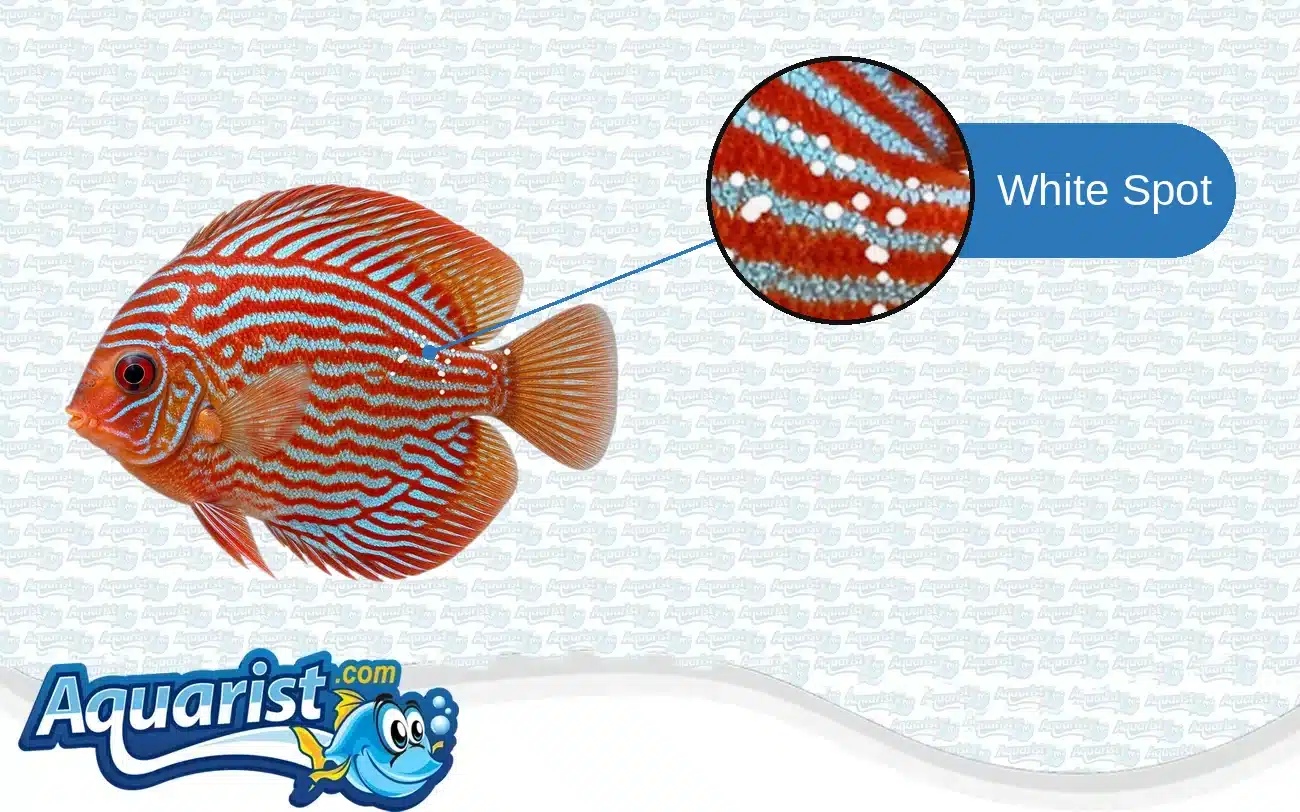
What it is
Freshwater ich is caused by Ichthyophthirius multifiliis, a single-celled parasite that lives under the outer skin layer. Each white dot is a feeding parasite. When mature it leaves the fish, settles on gravel or decor and splits into hundreds of free-swimming young that hunt for a new host. Medicine only reaches that free-swimming stage, so treatment has to run long enough to catch every wave.
Signs to look for
- Small white dots, like grains of salt, on the body, fins and gills
- Rubbing or flashing against rocks and gravel
- Clamped fins, faster breathing and less interest in food
- Spots that multiply quickly over a few days
Treatment
- Raise the temperature slowly, about 2°F (1°C) a day, to around 82 to 84°F (28 to 29°C) if all the fish and plants can handle it; this speeds up the life cycle so treatment works faster.
- Use a proven ich remedy (malachite green, formalin-based or copper-free blends) at the label dose; halve doses for scaleless fish such as kuhli loaches, clown loaches and catfish.
- Aquarium salt at about 1 to 2 teaspoons per gallon (roughly 1.3 to 2.6 g per liter) can help hardy fish, but not salt-sensitive species or live plants.
- Keep treating for several days after the last spot disappears.
- Remove carbon from the filter while medicating and add extra aeration.
Prevention
- Quarantine new fish for 2 to 4 weeks.
- Avoid sudden temperature drops, a common trigger.
- Don't add water or nets from a store tank to your aquarium.
Please note: This guide is general information, not a diagnosis. Always follow the medication's label for dose and duration, treat in a separate hospital tank when you can, and ask a fish vet if you're unsure.
Quick symptom checker
| Disease | Main sign |
|---|---|
| Ammonia and Nitrite Poisoning | Gasping at the surface |
| Anchor Worms and Fish Lice | Thin threads sticking out of the skin, sometimes with a red spot at the base |
| Body Flukes | Small red or irritated patches on the skin |
| Camallanus and Other Worms | Thin red threads sticking out of the vent |
| Columnaris | Grayish-white patches on the back, often called saddleback |
| Costia | A gray-blue, milky film over the body |
| Dropsy | Swollen belly |
| Eye Fluke | A milky or white spot inside the eye |
| Fin Hemorrhaging | Red streaks running through the fins |
| Fin Rot | Ragged, shortened or frayed fins |
| Fungus (Saprolegnia) | White or gray cotton-like tufts on the body or fins |
| Gill Flukes | Rapid breathing, gasping at the surface |
| Hexamita (Internal Parasites) | White, stringy, mucus-like feces |
| Hole-in-the-Head (HLLE) | Small pits or holes on the head that grow over time |
| Lymphocystis | White, cauliflower-like lumps on the fins or body |
| Malawi Bloat | Loss of appetite, often the first sign |
| Mouth Fungus | White, cottony patches around the mouth |
| Neon Tetra Disease | Pale or white patches in the muscle, often fading the blue stripe |
| Pop-Eye | One or both eyes bulging |
| Swim Bladder Disorder | Floating at the surface or sinking to the bottom |
| Ulcers and Red Sores | Red, open sores on the body |
| Velvet (Piscinoodinium) | Fine gold or rusty dust on the skin, easiest to see with a flashlight from the side |
| White Spot (Ich) | Small white dots, like grains of salt, on the body, fins and gills |
Freshwater Fish Disease FAQs
What is the most common freshwater fish disease?
Ich (white spot) is the most common. It often follows stress from a temperature drop or new fish being added without quarantine, and it responds well to treatment when caught early.
How do I know if my fish is sick?
Watch for changes in behavior first: hiding, clamped fins, gasping, rubbing on objects or refusing food. Then look for physical signs like spots, fuzz, ragged fins, a swollen belly or bulging eyes.
Should I treat the whole tank or just the sick fish?
Contagious parasites like ich and velvet live in the water, so the whole tank needs treating. Bacterial infections and internal problems are best handled in a hospital tank, which protects your filter bacteria and other fish.
Can aquarium salt cure fish diseases?
Salt helps with some parasites and nitrite poisoning and can ease stress in tolerant fish. It isn’t a cure-all, and many catfish, loaches, tetras and live plants don’t tolerate it well.
Why did my new fish get sick?
New fish are stressed by transport and a new home, which weakens their immune systems. They can also bring parasites from the store. Quarantining new fish for 2 to 4 weeks prevents most problems.
How can I prevent freshwater fish diseases?
Keep water clean with regular partial water changes, test ammonia, nitrite and nitrate, avoid overcrowding, feed a varied diet and quarantine every new fish.