Freshwater Aquarist

Popular Fish Species for your Aquarium

Here are some of the most popular freshwater fish species that are commonly kept in aquariums, each with unique characteristics and care requirements.

A common rule of thumb for how many freshwater fish you can keep in an aquarium is to allow about 1 inch of fish per gallon of water; however, this can vary depending on the specific fish species, their adult size, activity level, and bioload, with heavily planted or densely stocked tanks often needing more filtration and swimming room.

Filters
Bala Shark

Bala Shark

Overview The Bala Shark (Balantiocheilos melanopterus), also called the tricolor shark minnow, is a silver, black-edged cyprinid, not a true shark. Native to rivers and lakes of Borneo, Sumatra and Peninsular Malaysia. Grows to about 14 in (35 cm) standard length, so...

read more
Banded Leporinus

Banded Leporinus

Overview The Banded Leporinus (Leporinus fasciatus), also called the black-banded or striped leporinus, is a boldly striped South American headstander. Found through much of the Amazon and Orinoco basins and the rivers of the Guianas. Grows to about 11 in (27 cm)...

read more
Blue Neon Goby

Blue Neon Goby

Overview The Blue Neon Goby (Stiphodon atropurpureus) is a small stream goby. Males show a vivid blue sheen. Found in short coastal streams in the Philippines, southern China, Taiwan, Japan and Malaysia. Grows to about 2 in (5 cm). Often sold under the wrong name,...

read more
Bolivian Ram

Bolivian Ram

Overview The Bolivian Ram (Mikrogeophagus altispinosus) is a peaceful dwarf cichlid. It is also sold as the Bolivian butterfly cichlid. Native to the upper Rio Madeira basin in Bolivia and Brazil. Grows to about 3.1 in (8 cm) standard length. Usually a better choice...

read more
Clown Loach

Clown Loach

Overview The Clown Loach (Chromobotia macracanthus) is a bright orange loach with black bands. It is very popular, but often bought without knowing how big it gets. Native to rivers of Borneo and Sumatra in Indonesia. Can reach about 16 in (40 cm), though it grows...

read more
Duboisi Cichlid

Duboisi Cichlid

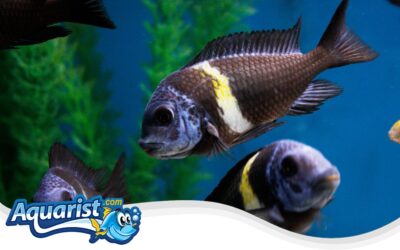
Overview The Duboisi Cichlid (Tropheus duboisi), or white-spotted cichlid, is a Lake Tanganyika cichlid. Juveniles are black with white spots and adults develop a pale band. Lives in rocky areas, in deeper water than other Tropheus. Grows to about 5 in (12 cm)...

read more
Discus

Discus

Overview The Discus (Symphysodon aequifasciatus and related Symphysodon species) is a disc-shaped Amazon cichlid prized for its color. Wild fish live in slow tributaries and forest pools along the Rio Solimões and Amazon. Grows to about 6 in (15 cm) long and nearly as...

read more
Common Pleco

Common Pleco

Overview "Common Pleco" is a trade name for several large suckermouth catfish, most often the Amazon sailfin catfish (Pterygoplichthys pardalis). Store fish may be a related species or Hypostomus plecostomus. P. pardalis is native to the Amazon basin in Brazil and...

read more
Cockatoo Dwarf Cichlid

Cockatoo Dwarf Cichlid

Overview The Cockatoo Dwarf Cichlid (Apistogramma cacatuoides) is a hardy South American dwarf cichlid named for the male's tall, crest-like dorsal fin. Widespread in the upper Amazon basin, in slow tributaries, backwaters and creeks with leaf litter. Males reach...

read more
German Blue Ram

German Blue Ram

Overview The German Blue Ram (Mikrogeophagus ramirezi), also called Ramirez's dwarf cichlid or butterfly cichlid, is a small, jewel-like dwarf cichlid. Native to the llanos savanna wetlands of the Orinoco basin in Venezuela and Colombia. Grows to about 1.6 in (4 cm)...

read more
Fairy Cichlid

Fairy Cichlid

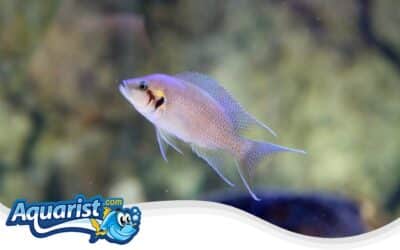
Overview The Fairy Cichlid (Neolamprologus brichardi), also known as the Princess of Burundi, is an elegant Lake Tanganyika cichlid with long, white-edged fins. Found along the rocky shores of Burundi, Tanzania and the Democratic Republic of the Congo, mostly 16–82 ft...

read more
Rainbow Shark

Rainbow Shark

Overview The Rainbow Shark (Epalzeorhynchos frenatum) is a dark-bodied cyprinid with red fins. An albino form is common. Reportedly native to Thailand, Laos and Cambodia, in the Mae Klong, Chao Phraya and Mekong basins. Grows to about 6 in (15 cm) standard length....

read more
Pindani Cichlid

Pindani Cichlid

Overview The Pindani Cichlid (Pseudotropheus socolofi), also called Eduard's mbuna, is a powder-blue Lake Malawi mbuna. Native to the Mozambique coast of Lake Malawi, between Cobue and Tumbi Point. Grows to about 5 in (11.5 cm) standard length. An albino form is also...

read more
Pearl Cichlid

Pearl Cichlid

Overview The Pearl Cichlid (Geophagus brasiliensis), also called the pearlscale or mother-of-pearl cichlid, is a robust eartheater with iridescent spangled scales. Native to coastal rivers of eastern and southern Brazil and Uruguay. Grows to about 10 in (25 cm)...

read more
Paraguay Eartheater

Paraguay Eartheater

Overview The Paraguay Eartheater (Gymnogeophagus balzanii) is a hump-headed South American cichlid that sifts sand for food. Native to the Paraná and Uruguay basins in Brazil, Paraguay, Argentina and Uruguay. Grows to about 8 in (20 cm) standard length. Best for...

read more
Otocinclus Catfish

Otocinclus Catfish

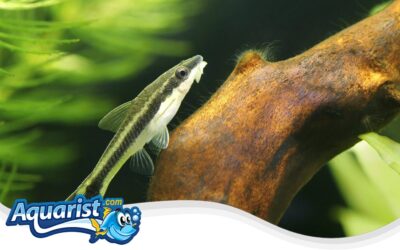
Overview "Otocinclus" or "oto" covers several small algae-eating catfish. The one sold most often is probably Otocinclus macrospilus. Shipments are often mixed species. O. macrospilus comes from the upper Amazon in Peru, and possibly Colombia and Ecuador. Grows to...

read more
Iridescent Shark

Iridescent Shark

Overview The Iridescent Shark (Pangasianodon hypophthalmus) is a large, schooling catfish, not a shark. It was formerly called Pangasius sutchi. Native to the Mekong and Chao Phraya rivers of Southeast Asia. Can reach about 51 in (130 cm) standard length. Sold as...

read more
Red Shoulder Severum

Red Shoulder Severum

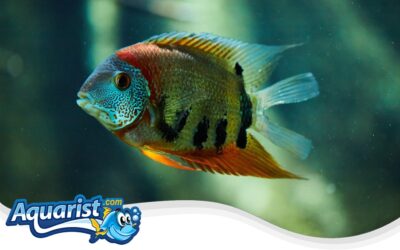
Overview The Red Shoulder Severum (Heros sp. "Rotkeil") is a severum from Brazil with a red patch behind the gills. Its exact identity is unclear. It is often linked to Heros efasciatus. Severums in general come from slow rivers and floodplain lakes of the Amazon....

read more
Red-tailed Black Shark

Red-tailed Black Shark

Overview The Red-tailed Black Shark (Epalzeorhynchos bicolor) is a velvet-black cyprinid with a bright red tail. Native to central and western Thailand. It is critically rare in the wild. Grows to about 5 in (12.5 cm) standard length. Fish in the trade are farmed....

read more
Zebra Loach

Zebra Loach

Overview The Zebra Loach (Botia striata) is a small botiid with fine yellow and dark stripes. Native to the Western Ghats region of southern India, described from the Tunga River. Grows to about 3.5 in (9 cm) standard length. Probably the best Botia for general...

read more
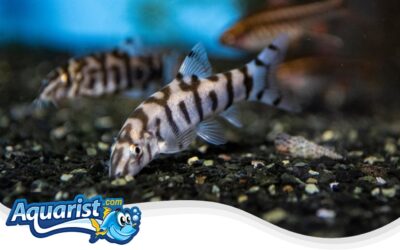
Yoyo Loach

Yoyo Loach

Overview The Yoyo Loach is usually sold as Botia almorhae. Its pale body has dark markings that can look like the letters "YOYO." Many trade fish may be B. lohachata or related species. The true appearance of B. almorhae is unclear. Native to northern India and Nepal....

read more
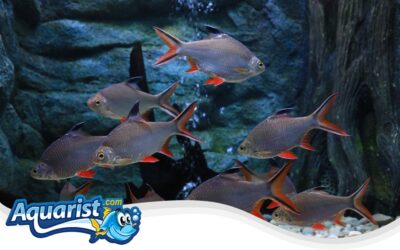
Tinfoil Barb

Tinfoil Barb

Overview The Tinfoil Barb (Barbonymus schwanenfeldii) is a large, shiny silver barb with red fins. Native to Southeast Asia. Found in Thailand, Malaysia, Sumatra and Borneo. Grows to about 14 in (35.5 cm) standard length. It is sold small but grows fast. Feeding An...

read more
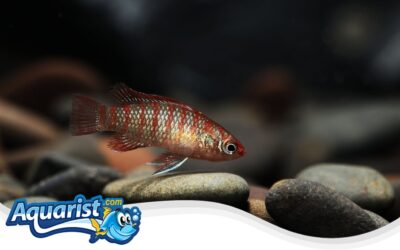
Scarlet Badis

Scarlet Badis

Overview The Scarlet Badis (Dario dario) is one of the smallest percoid fish. Males are bright red with blue bars. Found in tributaries of the Brahmaputra in West Bengal and Assam, India. Grows to about 0.8 in (2 cm) standard length. A popular nano fish. Feeding A...

read more
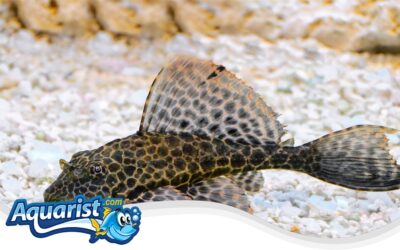
Sailfin Pleco

Sailfin Pleco

Overview The Sailfin Pleco (Pterygoplichthys gibbiceps) is a large suckermouth catfish with a tall dorsal fin and a leopard-like pattern. Native to the Amazon and Orinoco basins in Brazil, Ecuador, Peru and Venezuela. Can reach around 18–20 in (45–50 cm). Feeding An...

read more
Yucatan Sailfin Molly

Yucatan Sailfin Molly

Overview The Yucatan Sailfin Molly (Poecilia velifera), also called the giant sailfin molly, is the largest of the sailfin mollies. Mature males carry a huge, sail-shaped dorsal fin. Wild fish come only from southeastern Mexico, in the Yucatán and Quintana Roo region...

read more